Cheap Medical Anesthesia Ventilator with Best Price Portable Anesthesia Machines
廉价医疗麻醉呼吸机与最佳便宜麻醉机
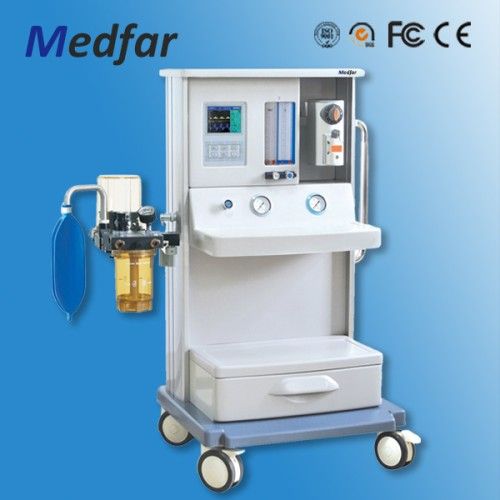
| 型号。 | MF-M-810 |
| PTR | -10-10hpa |
| 潮气量 | 50-1500ml |
| 规范 | ce&isop;异; ISO |
| 喷雾器 | 1蒸发器(恩氟烷/异氟烷/七氟醚) |
| 窥视 | 1-10hpa |
| 商标 | medfar |
| 起源 | 山东 |
2蒸发器麻醉机有优惠价格:
介绍 : 本段麻醉机采用亮数码管,直接旋钮调节参数双位蒸发器罐,整合呼吸回路,四米,设定体积极限压力同步麻醉呼吸机,并具有断电延时,机器通过CE认证,多年来赢得了私人医院的第一批销售,成本高昂
产品规格:
气动控制系统
内置呼吸机,LED显示屏
有1个成人电路(选项:儿童患者回路)。
2管流量计,O2&N2O; 0.1 L / Min〜10 L / Min; / Min;/Min;
双蒸发器,安氟醚/异氟烷/七氟醚;(选项:氟烷)
氧气冲洗:25〜75L / min;
呼吸模式:IPPV,SIPPV,Manu
潮气量:50〜1500 mL;
i:e:1:1.5; 1:2.0; 1:2.5; 1:3
呼吸频率:4〜40 bpm
Ptr:-10〜10 hPa;
CO2吸收容量:1.5 kg
报警参数:通气量上限/下限,气压上限/下限,潮气量超限,无潮气量输出,呼吸暂停,交流电源故障,电池低电量
环路部分:
综合设计,综合呼吸回路
蒸发器:
高精度单蒸发器配置,安氟醚或异氟烷或七氟烷或卤代氟烷
浓度调节范围:0.5〜5%VOL
蒸发器流量,压力和自动温度补偿功能
自锁功能
组态:
蒸发器:两个蒸发器,恩氟烷/异氟烷/七氟醚(选项:氟烷)
麻醉气体浓度范围:0.5〜5%
碱石灰吸收系统: 耐高温176摄氏度。
CE认证证书roved
2.结构特点及作业原理
该麻醉机由主要单元,麻醉蒸发器,流量计,麻醉呼吸器和呼吸回路系统组成。
2.1麻醉机主机
主机的结构和工作原理如图1所示。
图1
麻醉机使用压缩氧气和压缩的气体(一氧化二氮气体)从医院气瓶或中央供气系统。来自中央供气系统的压缩氧气和笑气均压力为0.4MPa。氧气和备用氧气通过单向阀组合后分为两个流量,一个连接到氧气冲洗阀,另一个流量由压力调节器减压至0.3至0.35MPa,然后进入流量计并与氧气故障报警相关联。笑气通过压力调节器减压至0.25至0.30MPa,然后进入流量计。来自气瓶或中央供氧系统的气体的压力可随温度和空气储存而变化。压力调节器(也称为减压阀)的目的是稳定气体压力并满足麻醉机的需要。
对于带气瓶的气体供应,必须使用压力调节器,输出压力应调整至0.4MPa。当入口压力变化1MPa时,压力调节器输出压力端口的压力变化小于8kPa,以确保输出压力的稳定性。压力调节器的输出装有一个安全阀。如果压力调节器发生故障或由于人为错误导致输出压力过高,则安全阀自动排出气体,以确保输出气体压力达到额定工作压力。安全阀排气压力范围为0.5〜0.6MPa。
流量计不仅可以指示,还可以调节氧气和笑气的流量。氧气流量调节阀和笑气流量调节阀之间安装了“氧气气体联动装置”和“笑气切断装置”。它们的功能:当只有氧气流量调节阀打开时,笑气流可能关闭;但是如果笑气流量调节阀打开,氧流量调节阀将不可避免地被连杆机构打开,以确保患者所需的氧气浓度。氧气和笑流打开后,如果氧气流速逐渐降低,氧气流量就会降低。当进入流量计的氧气的压力低于水表时,低于 0.20MPa±0.05MPa,流量计会自动关闭笑气流。在流量计出口处,氧气和笑气彼此混合,然后进入麻醉蒸发器。porizer.
如果麻醉机配备两个蒸发器,这两个蒸发器串联连接,当一个蒸发器被激活时,另一个蒸发器不能被激活,这可以确保只有一个蒸发器可以随时工作,以确保患者的安全。从麻醉蒸发器流出的混合气体流过单向阀到气体出口。然后通过过渡接口进入本手册后面将要描述的再循环回路。
当麻醉机运行时,通过打开快速开关,使气体输出口的压力始终处于波动水平。单向阀隔离这种波动压力对蒸发器的不利影响。
麻醉机配有快速供氧阀。通过按压该阀,供给到麻醉机中的氧气能够绕过诸如压力调节器,流量计,蒸发器等的一系列部件,然后直接进入再循环回路,从而快速供应大量的氧气。
为了安全考虑,在麻醉机的流量计中设置一个笑气体截止阀。当麻醉机入口氧气的压力低于 0.20MPa±0.05MPa,这种阀门自动关闭笑气。几乎同时,氧气供应故障报警蜂鸣。热闹非凡。 buzzes.
图2
麻醉机输入的压缩氧气应分开另一个流量,用作麻醉呼吸器的动力气源。用于呼吸器的操作压力表应用于监测呼吸器的压力。
2.2麻醉循环回路
麻醉循环回路也称为患者回路,是与患者连接的组合气体回路装置。其主要功能是将混合麻醉气体传输给患者,并允许患者正常吸入氧气并通过此类系统呼出二氧化碳。它可以在“操纵”或“手动”模式下操作。所谓的“机动模式”是指通过使用麻醉呼吸器来管理患者的呼吸功能的模式。所谓的“手动”模式是指麻醉师通过按压连接在再循环回路上的再循环回路上的储气袋来控制患者的呼吸的模式。
JINLING-01 I麻醉机采用综合麻醉循环回路。
图3
该麻醉机由主要单元,麻醉蒸发器,流量计,麻醉呼吸器和呼吸回路系统组成。
2.1麻醉机主机
主机的结构和工作原理如图1所示。
图1
麻醉机使用压缩氧气和压缩的气体(一氧化二氮气体)从医院气瓶或中央供气系统。来自中央供气系统的压缩氧气和笑气均压力为0.4MPa。氧气和备用氧气通过单向阀组合后分为两个流量,一个连接到氧气冲洗阀,另一个流量由压力调节器减压至0.3至0.35MPa,然后进入流量计并与氧气故障报警相关联。笑气通过压力调节器减压至0.25至0.30MPa,然后进入流量计。来自气瓶或中央供氧系统的气体的压力可随温度和空气储存而变化。压力调节器(也称为减压阀)的目的是稳定气体压力并满足麻醉机的需要。
对于带气瓶的气体供应,必须使用压力调节器,输出压力应调整至0.4MPa。当入口压力变化1MPa时,压力调节器输出压力端口的压力变化小于8kPa,以确保输出压力的稳定性。压力调节器的输出装有一个安全阀。如果压力调节器发生故障或由于人为错误导致输出压力过高,则安全阀自动排出气体,以确保输出气体压力达到额定工作压力。安全阀排气压力范围为0.5〜0.6MPa。
流量计不仅可以指示,还可以调节氧气和笑气的流量。氧气流量调节阀和笑气流量调节阀之间安装了“氧气气体联动装置”和“笑气切断装置”。它们的功能:当只有氧气流量调节阀打开时,笑气流可能关闭;但是如果笑气流量调节阀打开,氧流量调节阀将不可避免地被连杆机构打开,以确保患者所需的氧气浓度。氧气和笑流打开后,如果氧气流速逐渐降低,氧气流量就会降低。当进入流量计的氧气的压力低于水表时,低于 0.20MPa±0.05MPa,流量计会自动关闭笑气流。在流量计出口处,氧气和笑气彼此混合,然后进入麻醉蒸发器。porizer.
如果麻醉机配备两个蒸发器,这两个蒸发器串联连接,当一个蒸发器被激活时,另一个蒸发器不能被激活,这可以确保只有一个蒸发器可以随时工作,以确保患者的安全。从麻醉蒸发器流出的混合气体流过单向阀到气体出口。然后通过过渡接口进入本手册后面将要描述的再循环回路。
当麻醉机运行时,通过打开快速开关,使气体输出口的压力始终处于波动水平。单向阀隔离这种波动压力对蒸发器的不利影响。
麻醉机配有快速供氧阀。通过按压该阀,供给到麻醉机中的氧气能够绕过诸如压力调节器,流量计,蒸发器等的一系列部件,然后直接进入再循环回路,从而快速供应大量的氧气。
为了安全考虑,在麻醉机的流量计中设置一个笑气体截止阀。当麻醉机入口氧气的压力低于 0.20MPa±0.05MPa,这种阀门自动关闭笑气。几乎同时,氧气供应故障报警蜂鸣。热闹非凡。 buzzes.
图2
麻醉机输入的压缩氧气应分开另一个流量,用作麻醉呼吸器的动力气源。用于呼吸器的操作压力表应用于监测呼吸器的压力。
2.2麻醉循环回路
麻醉循环回路也称为患者回路,是与患者连接的组合气体回路装置。其主要功能是将混合麻醉气体传输给患者,并允许患者正常吸入氧气并通过此类系统呼出二氧化碳。它可以在“操纵”或“手动”模式下操作。所谓的“机动模式”是指通过使用麻醉呼吸器来管理患者的呼吸功能的模式。所谓的“手动”模式是指麻醉师通过按压连接在再循环回路上的再循环回路上的储气袋来控制患者的呼吸的模式。
JINLING-01 I麻醉机采用综合麻醉循环回路。
图3
1.手动/机动转换阀
通用气体入口
储物袋连接口
4.二氧化碳吸收器
排气阀
泄漏螺纹管口
7.吸入螺纹管口
8.吸入阀
9.压力表
10.APL安全阀
天气下降
排气入口
压力信号
氧浓度传感器接口
废气排气口
16.通过螺纹管连接17
17.通过螺纹管连接16
通用气体入口
储物袋连接口
4.二氧化碳吸收器
排气阀
泄漏螺纹管口
7.吸入螺纹管口
8.吸入阀
9.压力表
10.APL安全阀
天气下降
排气入口
压力信号
氧浓度传感器接口
废气排气口
16.通过螺纹管连接17
17.通过螺纹管连接16
当手动/机动转换阀置于手动位置时,再循环回路处于“手动”运行模式。通过按压主机上的快速供氧阀,氧气能够通过公共气体入口直接进入与再循环回路连接的气体存储袋。进气口
图4
在气体储存袋被按压之后,伴随着来自麻醉机主体的混合气体的气囊中的气体通过二氧化碳吸收器,吸入阀和与阀连接的螺纹管进入患者体内。吸入阀是单向阀。它只允许气体从再循环回路流到螺旋管,而不是回流。被患者呼气的气体通过连接在吸入阀和呼吸阀上的螺纹管(图中未示出)进入再循环回路并返回到储气袋。过滤阀也是单向阀。与吸入阀相比,它只允许气体从螺旋管流到再循环回路的内部,而不是流回,并且这样实现再循环。
当气体需要通过二氧化碳吸收器时,患者中的气体中的二氧化碳将与吸收器中的钠钙发生化学反应,以在流入吸入阀之前被吸收,麻醉机的主单元输送在患者进入再循环回路的呼吸中所需的氧气和麻醉气体。
每当压缩气体储存袋时,可以从压力计读取再循环回路中的气道压力。应通过调节APL安全阀来设定最大气道压力。一旦气道压力高于设定值,就会排出过多的气体。
当手动/机动转换阀进入操纵模式时,再循环回路处于“操纵”操作模式。此时,空气波纹管以“手动”模式取代储气袋。来自麻醉呼吸器的驱动气体通过循环回路上的驱动气体入口进入空气波纹管,并在空气波纹管的折叠袋的外部形成驱动力,以取代“手动”模式。在“手动”模式。quot; mode.
图5
由于患者吸入的气体不仅含有来自空气波纹管的气体,而且还伴随着来自麻醉机主体的新鲜混合气体,患者呼出的气体多于空气波纹管中的气体数量。空气波纹管内装有自动调节装置,将排放过多的气体。
在操作期间,麻醉呼吸器输出的气体的流量可以从呼气阀和呼气螺旋管之间的流速感测叶轮的RPM获得。当需要监测氧浓度时,氧浓度可以在氧浓度传感器连接器上进行取样。
二氧化碳监测器连接在麻醉循环回路的呼出螺旋管连接器处。麻醉气体监测器连接在麻醉循环回路的公共气体入口处。
注意:该系统中的胶乳组分包括螺旋管,k。储气袋和马斯当洗涤和消毒时,用户应注意,螺旋管由一次性部件和可重复使用的部件组成。储气袋是可重复使用的部件。当洗涤和消毒乳胶组分时,应特别注意清洁剂或消毒剂可能对组分具有腐蚀性和破坏性的影响。这几种胶乳组分主要在麻醉通气系统中。可重复使用的储气袋应重新使用,不会损坏。
2.3麻醉呼吸器
图4
在气体储存袋被按压之后,伴随着来自麻醉机主体的混合气体的气囊中的气体通过二氧化碳吸收器,吸入阀和与阀连接的螺纹管进入患者体内。吸入阀是单向阀。它只允许气体从再循环回路流到螺旋管,而不是回流。被患者呼气的气体通过连接在吸入阀和呼吸阀上的螺纹管(图中未示出)进入再循环回路并返回到储气袋。过滤阀也是单向阀。与吸入阀相比,它只允许气体从螺旋管流到再循环回路的内部,而不是流回,并且这样实现再循环。
当气体需要通过二氧化碳吸收器时,患者中的气体中的二氧化碳将与吸收器中的钠钙发生化学反应,以在流入吸入阀之前被吸收,麻醉机的主单元输送在患者进入再循环回路的呼吸中所需的氧气和麻醉气体。
每当压缩气体储存袋时,可以从压力计读取再循环回路中的气道压力。应通过调节APL安全阀来设定最大气道压力。一旦气道压力高于设定值,就会排出过多的气体。
当手动/机动转换阀进入操纵模式时,再循环回路处于“操纵”操作模式。此时,空气波纹管以“手动”模式取代储气袋。来自麻醉呼吸器的驱动气体通过循环回路上的驱动气体入口进入空气波纹管,并在空气波纹管的折叠袋的外部形成驱动力,以取代“手动”模式。在“手动”模式。quot; mode.
图5
由于患者吸入的气体不仅含有来自空气波纹管的气体,而且还伴随着来自麻醉机主体的新鲜混合气体,患者呼出的气体多于空气波纹管中的气体数量。空气波纹管内装有自动调节装置,将排放过多的气体。
在操作期间,麻醉呼吸器输出的气体的流量可以从呼气阀和呼气螺旋管之间的流速感测叶轮的RPM获得。当需要监测氧浓度时,氧浓度可以在氧浓度传感器连接器上进行取样。
二氧化碳监测器连接在麻醉循环回路的呼出螺旋管连接器处。麻醉气体监测器连接在麻醉循环回路的公共气体入口处。
注意:该系统中的胶乳组分包括螺旋管,k。储气袋和马斯当洗涤和消毒时,用户应注意,螺旋管由一次性部件和可重复使用的部件组成。储气袋是可重复使用的部件。当洗涤和消毒乳胶组分时,应特别注意清洁剂或消毒剂可能对组分具有腐蚀性和破坏性的影响。这几种胶乳组分主要在麻醉通气系统中。可重复使用的储气袋应重新使用,不会损坏。
2.3麻醉呼吸器
金陵01号麻醉呼吸器使用气动电控麻醉呼吸器。
来自动力气体输出的医用压缩氧通过具有冒险作用的气体喷射器,形成气体,其中医用氧气在一定压力下与大气混合。这种混合气体被输送到麻醉机的通气回路中以驱动气囊袋的运动,从而进行患者的机械通气。
在麻醉呼吸器中,使用快速电磁阀,高灵敏度流量传感器和压力传感器以及单片机控制系统来设置,测量和调整应用于患者的通气压力,通气时间,通气量等。当麻醉剂起作用并且患者失去自发呼吸时,麻醉呼吸器将以设定频率,呼吸频率和潮气量进行机械通气。当操作完成并且稍微恢复患者的自发呼吸时,麻醉呼吸器将自动与患者的自发呼吸同步。
如果麻醉电路处于“手动”模式,麻醉呼吸器可以实时显示潮气量,通气频率和气道压力,尽管它不参与通气控制。
2.4麻醉蒸发器
注意:当蒸发器与麻醉机不匹配时,蒸发器的性能将会恶化。
金陵01I麻醉机使用旁路变量,外置专用蒸发器。该蒸发器具有良好的压力补偿和温度补偿功能。当它处于关闭模式时,其入口与其出口直接连通,使得新鲜气体根本不通过蒸发器室,以避免麻醉剂的泄漏。通过转动浓度调节盘打开蒸发器后,新鲜气体通过切换阀,通过旁路温度控制针阀分流;一个流动将麻醉剂蒸气穿过控制针阀,并在被压力补偿器补偿并进入蒸发器室之后到达蒸发器出口;然后直接从新鲜气体入口与其他气体流合并。转动浓度调节盘可以调节控制针阀的口径,从而调节混合气体中麻醉气体的浓度。这里的压力补偿器旨在防止蒸发器上游和下游之间的压力波动的影响。旁通针阀的通气间隔自动随温度变化,起到温度补偿的作用。
3.技术
3.1运行模式:循环闭合,半闭合和半开。
3.2气体需求:医用氧气 一氧化氮 压力范围为0.3MPa至0.5MPa。
3.3压力测试装置的最大误差不应超过±(满刻度读数的4%+实际读数的8%)。eading).
3.4对于氧气和 一氧化氮将提供带安全阀的特殊压力调节器。安全阀的排气压力不应高于6 kPa。
3.5氧气的指示范围 一氧化氮 流量计:0.1L/分 ~ 10 L/分钟。
当流量范围从满量程的10%到100%时,刻度精度应在±10lusmn以内; 10lusmn;10% 的指示值。
3.6流量计配有氧气 - 一氧化氮 比例控制装置。
当混合气体中的氧浓度N时2Ø/ O2 由麻醉传达
机器不低于20%(V / V)或FiO2低于20%,机器将发出
报警。
3.7麻醉机氧气压力为0.20MPa±0.05MPa时,机器引起低气压报警器,是高优先级报警器,关闭 off the 一氧化氮 输送到公共气体出口。
3.8 氧气冲洗:25〜75L / min;
3.9 蒸发器麻醉气体浓度调节范围: 0~5%,相对误差±20%.mn; 20%。mn;20 %.
3.10 呼吸回路安全阀的排气压力不高于6 kPa。
3.11 麻醉呼吸机
3.11.1呼吸模式:IPPV,SIPPV,Manu
3.11.2呼吸频率:4〜40bpm
3.11.3 I / E比:1:1.5〜1:4
3.11.4潮气量:50〜1500mL
3.11.5 Ptr:-10〜10hPa
3.11.6受控通气和辅助通气切换时间:6s
3.11.7 最大安全压力: ≤12.5 12.512.5 千帕。
3.11.8 压力极限范围: 1~6 千帕
3.11.9气道压力报警:上限报警限制范围: 0.3kPa ~6 kPa,允许误差±0.2 kPa或±15%(以较大者为准),当气道压力上升到报警值时,机器应立即提高高电平报警;下限报警范围为0.2〜5 kPa,允许误差为±0.2 kPa或±15%(以较大者为准)。当气道压力下降到报警值时,机器应立即提高中等水平报警,此类状况持续4〜15秒。这种情况持续4〜15秒。uch condition lasts 4 to 15s.
3.11.10 潮气量报警:上限报警范围为50〜2000ml,允许误差为 ±20lusmn; 20lusmn;20%下限报警范围为0〜1800ml,允许误差为±20lusmn; 20lusmn;20% 机器应提高中等水平的报警。
3.11.11 通风量下限报警极限:调节范围为 0〜12L / min,允许误差为±20plusmn; 20lusmn;20%。通风量上限报警限为25L / min,允许误差为±20lusmn; 20lusmn;20% 机器应提高中等水平的报警。
3.11.12电源故障报警:机器在发生停电时应发出声音报警,报警时间应超过120秒。
3.11.13声音报警信号的静音时间应小于120秒。报警状态不应该被禁用,视觉报警信号不应该是间歇性的。
3.11.14应急电池应为额定输出电压为DC 12V的铅酸蓄电池。由电池驱动的麻醉呼吸器的操作持续时间应大于60分钟。
5.2安装麻醉机
1)在 在麻醉机架上摊档四脚轮。安装在麻醉机前部的两个脚轮应配备锁定装置。没有锁定装置的两个脚轮应安装在麻醉机的背面。
2)将麻醉机的框架推到预定位置,然后按下前轮的锁定装置,使麻醉机自由移动。
3)将麻醉剂蒸发器安装在麻醉机上蒸发器的特殊框架上,并使用艾伦工具拧紧连接座上的紧固螺丝。
4)通过分支臂将麻醉循环回路固定在麻醉机左侧的支撑架上,然后将呼吸波纹管和气袋连接在再循环回路上。
5)安装二氧化碳吸收器;
A)在使用麻醉机之前,需要将适量的碱石灰装入杯中。确保不要超过最大刻度线。然后按照以下方法密封杯和杯盖;首先要注意杯盖和杯子之间的接合位置,杯盖已经固定在电路体上。
图6
B)观察杯盖的扣位置(共4个扣位)
图7
C)观察杯子的卡扣位置(共4个卡扣)
图8
D)将杯子的卡扣与杯盖的扣位置对齐,用双手抓住杯子(注意锁定方向)将杯子向右转动,直到卡扣位于扣环的最内部位置时可以听到咔哒声。这表明钠钙杯是密封的。
E)如果需要更换碱石灰,请在取出杯子的同时转动杯子(注意锁定松开方向)。当您听到咔哒声,然后观察到卡扣与扣环完全分离时,可以取出杯子,然后将钠钙从杯中倒出。按照上述步骤再次执行操作。
图9
F)连接紧急电池,并使用螺旋管将麻醉呼吸器连接到麻醉循环回路。
G)将两个螺纹管连接在Y形T形管上。将一个管连接到再循环回路的吸气阀螺纹管连接器,并将另一个管连接到再循环回路的呼气阀螺纹管接头。
H)将Y形T形管与测试肺或皮包连接。
I)使用高压气管将麻醉机连接到压缩氧源和压缩的气源。
注意:氧气管为蓝色5×8毫米,笑气管橙色为5×8毫米×5×8毫米。;8 mm.5×8 mm.
J)将麻醉机的电源插头插入良好接地的单相交流220V电源插座。
注意:设备在水平状态和正常配置下倾斜10°时,不得失衡,但设备上添加其他设备会降低设备的稳定性。
5.3麻醉机预调节
1)检查麻醉机的再循环回路上的压力表上的指示零点和麻醉机的气道压力表。在有任何偏差的情况下,需要使用螺丝刀调整压力表的调零螺丝。
2)观察压缩气瓶或中央供气系统的输出压力表;其指示范围为0.3〜0.50MPa。压缩氧气和压缩气体连接后,观察动力气体输出压力表的指示;指示应与压缩氧气的输入压力一致;观察麻醉机板上的氧气压力表和笑气压力表;其指示值应在0.30MPa左右(笑气压力为0.25MPa,氧气压力为0.30MPa)。
3)转动流量计上的流量调节阀的旋钮,您应该可以看到:在调节期间,流量计浮力灵活移动,流量计浮力稳定,完成调节后不动。
4)将手动/机动切换开关置于手动位置,插入Y型三通管出口,按下快速供氧阀,3L容量的呼吸袋应充满3〜5s,再循环回路上的压力表应相应地指示气体回路的压力。
5)将麻醉机切换到机动模式,连接呼吸器的电源,并将其操作参数设置为以下值:潮气量0.70 L,通气频率20t / min,呼吸比12.您应该观察肺部检查或气体储存袋以呼吸器的通风频率膨胀和放气,并且再循环回路上的吸入阀和呼吸阀自由运行。
5.4安装调试后验收测试
1) 麻醉机高压回路密封性能试验
关闭流量计上的流量调节阀,连接压缩气源,在麻醉机上可以看到氧气压力表和笑气压力表上的指示值在0.3MPa左右。然后关闭压缩气源,您应该观察到麻醉机上的压力表的指示在五分钟内不会明显变动。
2) 麻醉机低压电路密封性能试验
将手动/机动转换开关置于麻醉循环回路到手动位置。插入与麻醉机连通的三通管出口,用快速供氧阀供气,您应注意气袋由于充气而膨胀;气道压力表指示值达到3kPa时停止供气,一分钟内应观察气道压力表上的指示值应小于0.4kPa。
3) 氧气气体连接功能测试流量计
连接压缩气源,将麻醉机出口与大气连接。转动流量计上的流量调节阀。你应该能够观察到:当你刚刚打开氧气流量调节阀时,笑气流失去;当你刚刚打开笑气流量调节阀时,氧气流也将通过连杆机构打开;氧气和笑气流完全打开后,逐渐减少氧气流量,笑流量也逐渐下降到封闭状态。在正常通风条件下,流量应稳定,氧气对笑气的流量应为1:1.5。
4) 自动笑气加压和供氧故障报警测试
连接压缩气源,将麻醉机出口与大气连接,打开氧气流量调节阀和笑气流量调节阀,逐渐降低输送到麻醉机中的压缩氧气压力,观察氧气压力表麻醉机,笑气流速随着氧气压力的下降而下降;当氧气压力低于 0.20MPa±0.05MPa,笑气流完全关闭,麻醉机发出持续不超过7秒7秒的警报。than 7s.
5) 潮气量测试
关闭麻醉机流量计上的氧气流量调节阀和笑气流量调节阀,将麻醉呼吸器的通气频率设定为20t / min,呼吸比为1:2,将麻醉剂的潮气调节阀呼吸器,您应该能够观察到三到四次通气后潮气量的指示值趋于稳定,调节范围不小于50mL至1500mL。如果使用测试肺,您还应该注意,麻醉呼吸器的潮气量与稳定后的试验肺相比,其指示值的最大误差不超过20%。
6) 报警功能测试
测试条件:关闭麻醉机流量计上的氧气流量调节阀和笑气流量调节阀,将麻醉呼吸器的操作参数设定为以下值:通气频率20t / min,呼吸比1:2。
注意:呼吸机启动后120s启动呼吸机报警系统。
7) 电源故障时的扩展功能测试
拆下麻醉机的交流电源插头(不打开电源开关),麻醉机应继续对应急电池进行操作。
6.使用和操作
6.1使用前的准备和检查
来源检查: 检查气瓶中的氧气和笑气是否足够,气瓶或医院中央供气系统的输出压力是否在0.3MPa到0.5MPa之间,以及压缩气源到麻醉机的连接电路是否正确良好和完成条件。
2.电源检查: 检查电网电压是否范围从AC220到AC240V,保护接地是否处于良好状态,以及麻醉机的电源插头是否牢固连接。
3.检查麻醉机(包括麻醉呼吸器)的使用记录和清洁消毒记录,并确认机器的性能良好。
警告:永远不要让没有彻底清洗和消毒的麻醉机或者有潜在的安全威胁操作。
4. 二氧化碳吸收器检查: 清除吸收器中的旧碱石灰,擦拭吸收器内部并用新鲜的石灰将其充满。
5. 用麻醉剂填充麻醉蒸发器。
6.通过使用快速供氧阀,模拟患者的通气方式,重新对气体循环进行充气,并冲洗再循环回路和通气回路,用纯氧除去废气。
7.调整和设定麻醉呼吸器的参数。
6.2使用麻醉机
1) 使用麻醉机最关键的操作是喂养麻醉剂浓度和通气管理和控制。麻醉机可以在手动模式下管理患者的呼吸,或者按照设定的参数自动控制患者的呼吸。在使用过程中,应密切关注麻醉机上所有仪器和麻醉呼吸器上的适应症是否符合患者的需要。一般来说,仪器的指示只能用作参考,即使它们非常准确,患者的病情是最根本的基础。
2) 打开麻醉蒸发器的方法:按压浓度调节盘逆时针转动以增加输出麻醉剂的浓度。调整盘转动后,无需压力按压。
注意:仅在通过蒸发器的流量范围为0.5至 10 L / min,输出麻醉剂浓度范围为0.5〜5vol % 可以确保蒸发器的输出浓度在允许的误差范围内。禁止在“OFF”(或“0”)刻度到第一个刻度线的范围内使用蒸发器,因为不能确保蒸发器的输出浓度在允许的误差范围内。允许的误差范围。
3) 麻醉剂剂量估计:
麻醉剂用量(mL)≈蒸发器输出的美容剂浓度(Voler(Voler (Vol % )×新鲜气体流量(L / min)×麻醉时间(小时)×3ime(小时)×3mes; 3ime (hour)× 3
这个公式是一个经验公式。例如,假设蒸发器的设定输出浓度为1.5V % ,从麻醉机流量计读取的氧气流量和笑气流量的总和为2L / min,操作持续时间估计为8小时,然后将待制备的麻醉剂的剂量蒸发器不得小于1.5×2×8×3 = 72×8×3 = 723 = 72imes;8×3 = 72 ( 毫升 ) .
当然,为了安全可靠,实际准备的麻醉剂的用量将超过估计值。
4)麻醉剂应在最高和最低分度线之间的135mL剂量。
5)由于开关动作的影响,蒸发器不能在“OFF”位置到“0”位置的范围内进行校准,因此浓度值不能设置在此范围内。
6)在断奶期间,应使用以下方法关闭蒸发器:按下浓度调节盘,顺时针方向将浓度调节盘转到零点,必须看到浓度调节盘卡住,此时应该确定浓度调节盘被锁定。
7)使用麻醉呼吸器通气时,建议使用高于2L / min的流量。在手动再循环闭合麻醉期间,推荐使用0.7至1L / min的氧气流量,以确保患者的氧气吸入和使用寿命。
8)低氧报警装置和笑气关闭装置的主要作用是当医用氧气压力下降,医用氧气不能正常使用时,自动报警,切断气流。
6.3使用麻醉呼吸器
6.3.1美容呼吸器
金陵01号麻醉机配备的麻醉呼吸器控制面板如下:
图10
呼吸器前面板由以下部件组成:
数字窗口 :数字窗口由三个单元组成,分别表示操作界面上从左到右的呼吸率,频率和潮气量。进入设置界面后,可以看到L1潮气量上限,L2潮气量下限,P1峰值压力上限和P2峰值压力下限。
报警灯: 红灯表示高电平报警,黄灯表示中等水平报警。
灵感触发灯: 当呼吸器被患者的自发呼吸触发时,指示灯将闪烁一次,指示患者自发产生当前呼吸周期。
压力限制灯: 当呼吸器的当前气道压力达到该值时,气道压力限制灯继续进行,麻醉呼吸器自动从吸气阶段切换到呼气期。
气道压力表: 它立即显示当前麻醉机的气道压力。
五个旋钮: 红色指示灯表示高电平报警,黄色指示灯表示中等水平报警。
1) 频率调节旋钮 :该旋钮用于将呼吸器的当前工作频率从4t / min调整到40t / min;
2) 通风量下限报警旋钮 调整范围为0〜12L / min。 1分钟内累积通气量低于此调整值时,呼吸器将产生中等水平的报警。
3) 灵感触发压力旋钮 : 调整范围: - 1.0kPa ~ + 1.0kPa,应根据患者的呼吸强度调整值的敏感度。如果该值设置得较大,则灵感将被更敏感地触发。
4) 气道压力限制旋钮 :调整范围:1.0kPa ~ 6.0kPa。您可以将此值设置为较大一点,然后将其调整为略高于患者实际最大气道压力。
5) 潮气量调节旋钮 :您可以将潮气量从50升至1500mL。
开关: 该开关用于打开和关闭呼吸器的电源。
3个功能键:
模式 键: 这个键有双重功能。如果按此键,呼吸器在辅助/受控模式和手动模式之间切换;如果按住此键2秒钟以上,进入设置界面,设置L1潮气量上限,L2潮气量下限,P1峰值压力上限和P2峰值压力下限。
比 键: 通过在操作界面上按此键可以更改呼吸比率的设置。
安静 键: 当发生报警时,可以通过按此键将闹钟声音静音120秒。如果时间到了之后,报警器不会被禁用,那么呼吸器会继续提高警报声。按住此键2秒以上即可进入报警查询界面。
麻醉呼吸器的操作和使用方法:
打开电源开关后,呼吸器进入自检状态,所有数码管闪烁三次,显示软件版本号。此状态持续4秒后,呼吸器进入启动界面,并按照存储在存储器中的参数开始通风。操作员可以通过面板上的旋钮和按键直接调整所有参数,以达到适合患者的状态。
报警设置界面:
当需要更改报警上限和下限时,可以按住 模式 键超过2秒进入设置界面设置L1潮气量上限。此时,数字窗口显示L1正在闪烁,后跟当前设置的值。按压 比 键代表增量1,按下 安静 键一次表示减1,按住 比 键代表连续递增1并按住 安静 键代表连续减量1,修改潮气量上限,调节范围为50mL〜2000mL。
完成设置后,按下 模式 键可以输入L2潮气量下限设置界面来设置下限。设定方法与上述相同,调节范围为0〜1800mL。
完成设置后,按下 模式 键可以进入P1峰值压力上限设置界面设置上限。设定方法与上述相同,调整范围为0.3〜6.0kPa。
完成设置后,按下 模式 键可以输入P2峰值下限设置界面来设置下限。设定方法与上述相同,调整范围为0.2〜5.0kPa。
完成设置后,按下 模式 键可以返回到操作界面(如图12所示),存储报警参数并完成设置。
报警查询界面:
呼吸器在操作过程中发出警报,报警灯将根据不同的报警发出中高位报警指示。此时可以通过按住该键来进入报警查询界面 安静 2年以上的关键潮气量窗口上显示的相应代码表示发生什么报警。代码名称如下:
P上限,表示高压上限报警,红灯闪烁。
P下限,表示中等水平下限报警,黄灯闪烁。
L上限,表示中等水平上限报警,黄灯闪烁。
L下限,这表示中等水平下限潮流量限制报警,黄灯闪烁。
U上限,表示中等水平上通风量限位报警,黄灯闪烁。
U下限,表示中等通风下限报警,黄灯闪烁。
Po,这表示高水平低气源压力报警,红灯闪烁。
CP,表示高电平连续正压报警,红灯闪烁。
12.0,表示电池电量。
如果同时发生多个报警,可以通过按下来查询所有当前报警代码 安静 键一次在报警查询界面上。
在麻醉呼吸器的前面板上,附近显示明显的笔记字,指示灯附近。当指示灯亮起时,这表示麻醉呼吸器处于运行状态,如笔记字所述。
麻醉呼吸器电源输入插座,保险丝盒,应急电池输入口,动力气体输入连接器,压力信号连接器和流量传感器输入插座位于后面板上,并具有明显的中文标签。
在手动通气模式下,麻醉呼吸器仍然可以显示手动通气的频率,潮气量和气道压力,仍然提供气道压力报警,通风量报警等。
6.3.2交流和直流操作
如果使用麻醉机时交流电源出现故障,机器将自动切换到直流电源,并根据原来设定的参数进行操作。如果直流电源也被中断,麻醉呼吸器将停止供气,麻醉机切换到手动模式,为患者提供新鲜的气体。
6.3.3压力维护
当麻醉系统停止供气时,将维持医用气体管道的压力。
| Model NO. | MF-M-810 |
| Ptr | -10-10hpa |
| Tidal Volum | 50-1500ml |
| Specification | CE & ISOp; ISO; ISO |
| Vaporizer | 1 Vaporizer(Enflurane/Isoflurane/Sevoflurane) |
| Peep | 1-10hpa |
| Trademark | MEDFAR |
| Origin | Shandong |
2 vaporizer Anesthesia Machine With Favourable Price:
Intro : This paragraph anesthesia machine uses bright digital tube, directly knob to adjust the parameters double digit evaporator tank, integration of integrated breathing circuit, four meter, set the volume limit pressure synchronous anesthesia ventilator, and has power-off delay, machine through the CE certification, for many years won the first sales of private hospitals, high cost
Specifications:
Pneumatically drivenelectronicallycontrolled system
Built-in ventilator, LED display screen
With 1 patient circuit for adult (Option:patient circuit for children).
2-tube flowmeters, O2 & N2O;0.1 L/Min ~10 L/Min;/Min;/Min;
Double vaporizer, Enflurane/Isoflurane/Sevoflurane;(Option: Halothane)
Oxygen Flush: 25~75 L/Min;
Respiration Mode: IPPV, SIPPV,Manu
Tidal Volume: 50~1500 mL;
I:E: 1:1.5; 1:2.0; 1:2.5; 1:3
Respiration Frequency: 4~40 bpm
Ptr: -10~10 hPa;
CO2 absorber capacity: 1.5 kg
Alarm parameter: upper/lower limit ofventilation volume, upper /lower limit ofairway pressure, tidal volume exceedlimitation, no tidal volume output, apnea,AC power malfunction, battery lowpower
Loop part:
Integrated design, integrated breathing circuits
Evaporator:
High-precision single evaporator configuration, enflurane or isoflurane or Sevflurane or Haloflurane
Concentration adjustment range: 0.5 ~ 5%VOL
Evaporator flow, pressure, andautomatictemperature compensation function
Self-locking feature
Configuration:
Vaporizer: Two vaporizers,Enflurane/Isoflurane/Sevoflurane(Option: Halothane)
Anesthesia gas concentration range:0.5~5%
Soda lime absorption system: resistant to high temperature of 176 degrees Celsius.
CE & ISO certificates approvedrovedroved
2.Structural Characteristics and Operating Principles
This anesthesia machine consists of a main unit, an anesthetic vaporizer, a flow meter, an anesthesia respirator and a respiratory circuit system.
2.1 Anesthesia Machine Main Unit
The structure and operating principles of the main unit are as shown in Figure 1.
Figure 1
The anesthesia machine uses compressed oxygen and compressed laughing gas (nitrous oxide gas) from a gas cylinder or central gas supply system at the hospital. The compressed oxygen and laughing gas from the central gas supply system are both at a pressure of 0.4MPa. After oxygen and backup oxygen are combined by a one-way valve and then split into two flows, one is connected to an oxygen flush valve, and the other flow is depressurized to 0.3 to 0.35MPa by a pressure regulator and then enters a flow meter and is connected with an oxygen fault alarm. The laughing gas is depressurized to 0.25 to 0.30MPa by a pressure regulator and then enters the flow meter. The pressure of the gas from the gas cylinder or central oxygen supply system may vary with the temperature and air storage. The purpose of the pressure regulator (also called reducing valve) is to stabilize the gas pressure and meet the need of the anesthesia machine.
For the gas supply with a gas cylinder, a pressure regulator must be used and the output pressure should be adjusted to 0.4MPa. The variation in the pressure at the output pressure port of the pressure regulator is less than 8kPa when the inlet pressure varies by 1MPa to ensure the stability of output pressure. The output of the pressure regulator is equipped with a safety valve. If a fault occurs to the pressure regulator or the output pressure is caused to be too high due to human errors, the safety valve automatically exhausts gas to ensure that the output gas pressure reaches the rated operating pressure. The exhaust pressure of safety valve ranges from 0.5 to 0.6MPa.
The flow meter not only can indicate but also can adjust the flow rates of the oxygen and laughing gas. A 'oxygen-laughing gas linkage device' and 'laughing gas cut-off equipment' are installed between the oxygen flow regulator valve and laughing gas flow regulator valve. Their functions: when only the oxygen flow regulator valve is opened, laughing gas flow may be closed; but if the laughing gas flow regulator valve is opened, the oxygen flow regulator valve will inevitably be opened by the link mechanism to ensure the oxygen concentration required by the patient. After the oxygen and laughing flows are opened, the oxygen flow rate will decrease if the oxygen flow rate is decreased gradually. When the pressure of the oxygen entering the flow meter is lower thanw meter is lower than 0.20MPa±0.05MPa, the flow meter will automatically close the laughing gas flow. At the flow meter outlet, oxygen and laughing gas are mixed with each other and then enter the anesthetic vaporizer.porizer.porizer.
If the anesthesia machine is equipped with two vaporizers and such two vaporizers are connected in series, when one vaporizer is activated the other one cannot be activated and this can ensure that only one vaporizer can work at any time to ensure patient safety. The mixed gas flowing out from the anesthetic vaporizer flows through a one-way valve to the gas outlet. Then it passes through a transition interface to enter the recirculation circuit to be described later in this manual.
When the anesthesia machine is in operation, the pressure at the gas output port will be caused to be always at a fluctuating level by turning on the rapid switch. The one-way valve isolates the adverse impacts that such fluctuating pressure has on the vaporizer.
The anesthesia machine is equipped with a rapid oxygen supply valve. By pressing this valve, the oxygen supplied into the anesthesia machine can be enabled to bypass such a series of components as pressure regulator, flow meter, vaporizer, etc and then directly enter the recirculation circuit and thus rapidly supply a great amount of oxygen.
For safety consideration, a laughing gas shutoff valve is arranged in the flow meter of the anesthesia machine. When the pressure of the inlet oxygen of the anesthesia machine is lower than 0.20MPa±0.05MPa, such valve automatically shuts off the laughing gas. Almost at the same time, oxygen supply fault alarm buzzes. buzzes. buzzes.
Figure 2
The compressed oxygen input in the anesthesia machine should be split for another flow which will be used as power gas source for the anesthetic respirator. The operating pressure gauge for the respirator should be used for monitoring the pressure of the respirator.
2.2 Anesthetic Recirculation Circuit
The anesthetic recirculation circuit, also called patient circuit, is a combination gas circuit device connected with the patient. Its main function is to transmit mixed anesthetic gases to the patient and allow the patient to normally inhale oxygen and exhale carbon dioxide through such system. It can operate in the 'Maneuvering' or 'Manual' mode. The so-called 'Maneuvering Mode' refers to the mode in which the patient's respiratory function is managed by using the anesthetic respirator. The so-called 'Manual' mode refers to the mode in which an anesthetist controls the respiration of the patient by pressing the air storage bag connected on the recirculation circuit.g connected on the recirculation circuit.
An integrated anesthetic recirculation circuit is used on the JINLING-01 I Anesthesia Machine.
Figure 3
This anesthesia machine consists of a main unit, an anesthetic vaporizer, a flow meter, an anesthesia respirator and a respiratory circuit system.
2.1 Anesthesia Machine Main Unit
The structure and operating principles of the main unit are as shown in Figure 1.
Figure 1
The anesthesia machine uses compressed oxygen and compressed laughing gas (nitrous oxide gas) from a gas cylinder or central gas supply system at the hospital. The compressed oxygen and laughing gas from the central gas supply system are both at a pressure of 0.4MPa. After oxygen and backup oxygen are combined by a one-way valve and then split into two flows, one is connected to an oxygen flush valve, and the other flow is depressurized to 0.3 to 0.35MPa by a pressure regulator and then enters a flow meter and is connected with an oxygen fault alarm. The laughing gas is depressurized to 0.25 to 0.30MPa by a pressure regulator and then enters the flow meter. The pressure of the gas from the gas cylinder or central oxygen supply system may vary with the temperature and air storage. The purpose of the pressure regulator (also called reducing valve) is to stabilize the gas pressure and meet the need of the anesthesia machine.
For the gas supply with a gas cylinder, a pressure regulator must be used and the output pressure should be adjusted to 0.4MPa. The variation in the pressure at the output pressure port of the pressure regulator is less than 8kPa when the inlet pressure varies by 1MPa to ensure the stability of output pressure. The output of the pressure regulator is equipped with a safety valve. If a fault occurs to the pressure regulator or the output pressure is caused to be too high due to human errors, the safety valve automatically exhausts gas to ensure that the output gas pressure reaches the rated operating pressure. The exhaust pressure of safety valve ranges from 0.5 to 0.6MPa.
The flow meter not only can indicate but also can adjust the flow rates of the oxygen and laughing gas. A 'oxygen-laughing gas linkage device' and 'laughing gas cut-off equipment' are installed between the oxygen flow regulator valve and laughing gas flow regulator valve. Their functions: when only the oxygen flow regulator valve is opened, laughing gas flow may be closed; but if the laughing gas flow regulator valve is opened, the oxygen flow regulator valve will inevitably be opened by the link mechanism to ensure the oxygen concentration required by the patient. After the oxygen and laughing flows are opened, the oxygen flow rate will decrease if the oxygen flow rate is decreased gradually. When the pressure of the oxygen entering the flow meter is lower thanw meter is lower than 0.20MPa±0.05MPa, the flow meter will automatically close the laughing gas flow. At the flow meter outlet, oxygen and laughing gas are mixed with each other and then enter the anesthetic vaporizer.porizer.porizer.
If the anesthesia machine is equipped with two vaporizers and such two vaporizers are connected in series, when one vaporizer is activated the other one cannot be activated and this can ensure that only one vaporizer can work at any time to ensure patient safety. The mixed gas flowing out from the anesthetic vaporizer flows through a one-way valve to the gas outlet. Then it passes through a transition interface to enter the recirculation circuit to be described later in this manual.
When the anesthesia machine is in operation, the pressure at the gas output port will be caused to be always at a fluctuating level by turning on the rapid switch. The one-way valve isolates the adverse impacts that such fluctuating pressure has on the vaporizer.
The anesthesia machine is equipped with a rapid oxygen supply valve. By pressing this valve, the oxygen supplied into the anesthesia machine can be enabled to bypass such a series of components as pressure regulator, flow meter, vaporizer, etc and then directly enter the recirculation circuit and thus rapidly supply a great amount of oxygen.
For safety consideration, a laughing gas shutoff valve is arranged in the flow meter of the anesthesia machine. When the pressure of the inlet oxygen of the anesthesia machine is lower than 0.20MPa±0.05MPa, such valve automatically shuts off the laughing gas. Almost at the same time, oxygen supply fault alarm buzzes. buzzes. buzzes.
Figure 2
The compressed oxygen input in the anesthesia machine should be split for another flow which will be used as power gas source for the anesthetic respirator. The operating pressure gauge for the respirator should be used for monitoring the pressure of the respirator.
2.2 Anesthetic Recirculation Circuit
The anesthetic recirculation circuit, also called patient circuit, is a combination gas circuit device connected with the patient. Its main function is to transmit mixed anesthetic gases to the patient and allow the patient to normally inhale oxygen and exhale carbon dioxide through such system. It can operate in the 'Maneuvering' or 'Manual' mode. The so-called 'Maneuvering Mode' refers to the mode in which the patient's respiratory function is managed by using the anesthetic respirator. The so-called 'Manual' mode refers to the mode in which an anesthetist controls the respiration of the patient by pressing the air storage bag connected on the recirculation circuit.g connected on the recirculation circuit.
An integrated anesthetic recirculation circuit is used on the JINLING-01 I Anesthesia Machine.
Figure 3
1.Manual/Maneuvering changeover valve
2.Common gas inlet
3.Gas storage bag connection port
4.Carbon dioxide absorber
5.Exhalation valve
6.Exhalation screwed pipe port
7.Inhalation screwed pipe port
8.Inhalation valve
9.Pressure gauge
10.APL safety valve
11.Air bellow
12.Driving gas inlet
13.Pressure signal
14.Oxygen concentration sensor interface
15.Waste gas exhaust port
16.Connection with 17 through screwed pipe
17.Connection with 16 through screwed pipe
2.Common gas inlet
3.Gas storage bag connection port
4.Carbon dioxide absorber
5.Exhalation valve
6.Exhalation screwed pipe port
7.Inhalation screwed pipe port
8.Inhalation valve
9.Pressure gauge
10.APL safety valve
11.Air bellow
12.Driving gas inlet
13.Pressure signal
14.Oxygen concentration sensor interface
15.Waste gas exhaust port
16.Connection with 17 through screwed pipe
17.Connection with 16 through screwed pipe
When the Manual/Maneuvering changeover valve is put to the Manual position, the recirculation circuit is in the 'Manual' operating mode. By pressing the rapid oxygen supply valve on the main unit, the oxygen is enabled to directly enter the gas storage bag connected with the recirculation circuit through the common gas inlet. gas inlet.
Figure 4
After the gas storage bag is pressed, the gas in the gas bag which is accompanied with mixed gases from the main unit of the anesthesia machine enters the body of the patient through the carbon dioxide absorber, inhalation valve and screwed tube connected with the valve. The inhalation valve is a one-way valve. It only allows the gas to flow to the screwed tube from the recirculation circuit rather than flow back. The gas expired by the patient enters the recirculation circuit through the screwed tube (not shown in the figure) connected on the inhalation valve and expiration valve and returns to the gas storage bag. The expiration valve is also a one-way valve. In contrast to the inhalation valve, it only allows the gas to flow from the screwed tube to the interior of the recirculation circuit rather than flow back and recirculation is achieved like this.
As the gas needs to pass through the carbon dioxide absorber where the carbon dioxide in the gas expired by the patient will chemically react with the soda lime in the absorber to be absorbed before flowing to the inhalation valve, the main unit of the anesthesia machine delivers the oxygen and anesthetic gas required in the respiration by the patient into the recirculation circuit.
Each time when the gas storage bag is pressed, the airway pressure in the recirculation circuit can be read from the pressure gauge. The maximum airway pressure should be set by adjusting the APL safety valve. Once the airway pressure is higher than the set value, excessive gas will be discharged.
When the Manual/Maneuvering changeover valve is put to the Maneuvering mode, the recirculation circuit is in the 'Maneuvering' operating mode. At this time, the air bellow replaces the gas storage bag in the 'Manual' mode. The driving gas from the anesthetic respirator enters the air bellow through the driving gas inlet on the recirculation circuit and forms a driving force on the exterior of the folded bag of the air bellow to replace the 'Manual' mode.ce the "Manual" mode.quot; mode.
Figure 5
As the gases inhaled by the patient not only contain the gas from the air bellow bag but also are accompanied with fresh mixed gases from the main unit of the anesthesia machine, the gas expired by the patient is more than the gas in the air bellow bag in the amount. An automatic adjustment device is installed in the air bellow bag and it will discharge the excessive gas.
During the operation, the flow rate of the gas output by the anesthetic respirator can be obtained from the RPM of the flow rate sensing impeller between the expiration valve and expiration screwed tube. When the oxygen concentration needs to be monitored, the oxygen concentration can be sampled at the oxygen concentration transducer connector.
The carbon dioxide monitor is connected at the expiration screwed tube connector of the anesthetic recirculation circuit. The anesthetic gas monitor is connected at the common gas inlet of the anesthetic recirculation circuit.
Attention: latex components within this system include the screwed tube, k. gas storage bag and mas. When washing and disinfecting them, the user should note that the screwed tube consists of disposable components and reusable components. The gas storage bag is a reusable component. When washing and disinfecting latex components, special attention should be paid to that cleaning agent or disinfectant may have corrosive and damaging effects on the components. These several latex components are mainly in the anesthetic ventilation system. The reusable gas storage bag should be reused to the extent that it is not damaged.
2.3 Anesthetic Respirator
Figure 4
After the gas storage bag is pressed, the gas in the gas bag which is accompanied with mixed gases from the main unit of the anesthesia machine enters the body of the patient through the carbon dioxide absorber, inhalation valve and screwed tube connected with the valve. The inhalation valve is a one-way valve. It only allows the gas to flow to the screwed tube from the recirculation circuit rather than flow back. The gas expired by the patient enters the recirculation circuit through the screwed tube (not shown in the figure) connected on the inhalation valve and expiration valve and returns to the gas storage bag. The expiration valve is also a one-way valve. In contrast to the inhalation valve, it only allows the gas to flow from the screwed tube to the interior of the recirculation circuit rather than flow back and recirculation is achieved like this.
As the gas needs to pass through the carbon dioxide absorber where the carbon dioxide in the gas expired by the patient will chemically react with the soda lime in the absorber to be absorbed before flowing to the inhalation valve, the main unit of the anesthesia machine delivers the oxygen and anesthetic gas required in the respiration by the patient into the recirculation circuit.
Each time when the gas storage bag is pressed, the airway pressure in the recirculation circuit can be read from the pressure gauge. The maximum airway pressure should be set by adjusting the APL safety valve. Once the airway pressure is higher than the set value, excessive gas will be discharged.
When the Manual/Maneuvering changeover valve is put to the Maneuvering mode, the recirculation circuit is in the 'Maneuvering' operating mode. At this time, the air bellow replaces the gas storage bag in the 'Manual' mode. The driving gas from the anesthetic respirator enters the air bellow through the driving gas inlet on the recirculation circuit and forms a driving force on the exterior of the folded bag of the air bellow to replace the 'Manual' mode.ce the "Manual" mode.quot; mode.
Figure 5
As the gases inhaled by the patient not only contain the gas from the air bellow bag but also are accompanied with fresh mixed gases from the main unit of the anesthesia machine, the gas expired by the patient is more than the gas in the air bellow bag in the amount. An automatic adjustment device is installed in the air bellow bag and it will discharge the excessive gas.
During the operation, the flow rate of the gas output by the anesthetic respirator can be obtained from the RPM of the flow rate sensing impeller between the expiration valve and expiration screwed tube. When the oxygen concentration needs to be monitored, the oxygen concentration can be sampled at the oxygen concentration transducer connector.
The carbon dioxide monitor is connected at the expiration screwed tube connector of the anesthetic recirculation circuit. The anesthetic gas monitor is connected at the common gas inlet of the anesthetic recirculation circuit.
Attention: latex components within this system include the screwed tube, k. gas storage bag and mas. When washing and disinfecting them, the user should note that the screwed tube consists of disposable components and reusable components. The gas storage bag is a reusable component. When washing and disinfecting latex components, special attention should be paid to that cleaning agent or disinfectant may have corrosive and damaging effects on the components. These several latex components are mainly in the anesthetic ventilation system. The reusable gas storage bag should be reused to the extent that it is not damaged.
2.3 Anesthetic Respirator
The JINLING-01 I anesthetic respirator uses a pneumatic electric controlled anesthetic respirator.
The medical compressed oxygen from a power gas output passes through a gas jetter with venture effect to form a gas in which medical oxygen is mixed with atmosphere at a certain pressure. Such mixed gas is delivered into the ventilation circuit of the anesthesia machine to drive the motion of the air bellow bag and thus perform the mechanical ventilation of the patient.
In the anesthetic respirator, a fast solenoid valve, a high sensitivity flow sensor and pressure sensor and single-chip computer control system are used to set, measure and adjust the ventilation pressure, ventilation duration, ventilation volume, etc ,applied to the patient. When the anesthetic agent takes effect and the patient loses spontaneous breathing, the anesthetic respirator will perform mechanical ventilation at the set frequency, respiratory rate and tidal volume. When the operation is completed and spontaneous breathing of the patient is resumed somewhat, the anesthetic respirator will automatically synchronize with the spontaneous breathing of the patient.
If the anesthetic circuit is in the 'Manual' mode, the anesthetic respirator can display the tidal volume, ventilation frequency and airway pressure in real time although it does not participate in the ventilation control.on control.
2.4 Anesthetic Vaporizer
Attention: when the vaporizer does not match the anesthesia machine, the performance of the vaporizer will be deteriorated.
A bypass variable, outside-circuit dedicated vaporizer is used on the Jinling-01 I anesthesia machine. This vaporizer has good pressure compensation and temperature compensation functions. When it is in the off mode, its inlet is directly communicated with its outlet so that the fresh gas does not pass through the vaporizer chamber at all to avoid the leakage of the anesthetic agent. After the vaporizer is opened by turning the concentration adjustment disk, the fresh gas passes through the switching valve to be split by a bypass temperature control needle valve; one flow carries the anesthetic agent vapor to pass through the control needle valve and arrive at the vaporizer outlet after being compensated by the pressure compensator and entering the vaporizer chamber; then it merges with the other gas flow directly from the fresh gas inlet. Turning the concentration adjustment disk can adjust the caliber of the control needle valve and this results in the adjustment of the concentration of the anesthetic gas in the mixed gas. The pressure compensator here is intended for preventing the impacts that the pressure fluctuation between the upstream and downstream of the vaporizer. The ventilation interval of the bypass needle valve automatically changes with the temperature to play the role of temperature compensation.
3. Technical
3.1 Operating mode: circulatory closed, semi-closed and semi-open.
3.2 Gas requirement: medical oxygen and nitrous oxide with a pressure ranging from 0.3 MPa to 0.5 MPa.
3.3 The maximum error of the pressure testing device should not exceed ± (4% of the full scale reading + 8% of the actual reading).eading).eading).
3.4 For oxygen and nitrous oxide, a special pressure regulator with a safety valve will be provided. The exhaust pressure of the safety valve should not be higher than 6 kPa.
3.5 Indication range of the oxygen and nitrous oxide flow meter: 0.1 L/min ~ 10 L/min.
When the flow rate ranges from 10% of the full scale value to 100%, the scale accuracy should be within ±10lusmn;10lusmn;10% of the indicated value.
3.6 The flow meter is equipped with an oxygen-nitrous oxide proportional control device.
When the oxygen concentration in the mixed gas N2O/O2 conveyed by the anesthesia
machine is no lower than 20% (V/V) or the FiO2 is lower than 20%, the machine will emit an
alarm.
3.7 When the oxygen pressure of the anesthesia machine is 0.20MPa±0.05MPa, the machine raises a low gas source pressure alarm which is a high priority alarm, and shuts off the off the off the nitrous oxide conveyed to the common gas outlet.
3.8 Oxygen Flush:25~75 L/Min;
3.9 Anesthetic gas concentration adjustment range of vaporizer: 0~5%, relative error ±20 %.mn;20 %.mn;20 %.
3.10 The exhaust pressure of the safety valve of the respiratory circuit is no higher than 6 kPa.
3.11 Anesthesia ventilator
3.11.1 Respiration Mode:IPPV,SIPPV,Manu
3.11.2 Respiration Frequency:4~40bpm
3.11.3 I/E Ratio:1:1.5~1:4
3.11.4 Tidal Volume:50~1500mL
3.11.5 Ptr:-10~10hPa
3.11.6 Controlled ventilation and assisted ventilation switching time: 6s
3.11.7 Maximum safety pressure: ≤ 12.5 12.512.5 kPa.
3.11.8 Pressure limit range: 1~6 kPa
3.11.9 Airway pressure alarm: adjustment range of upper alarm limit: 0.3kPa ~6 kPa, permissible error ±0.2 kPa, or ±15% (whichever is greater), the machine should immediately raise a high level alarm when the airway pressure rises to the alarm value; the lower alarm limit ranges from 0.2 to 5 kPa and the permissible error is ±0.2 kPa or ±15% (whichever is greater). The machine should immediately raise a medium level alarm when the airway pressure drops to the alarm value and such condition lasts 4 to 15s.such condition lasts 4 to 15s.uch condition lasts 4 to 15s.
3.11.10 Tidal volume alarm: the upper alarm limit ranges from 50 to 2000ml, the permissible error is ±20lusmn;20lusmn;20%, the adjustment range of the lower alarm limit is 0~1800ml, the permissible error is ±20lusmn;20lusmn;20% and the machine should raise a medium level alarm.
3.11.11 Ventilation volume lower alarm limit: the adjustment range is 0~12 L/min , and the permissible error is ±20plusmn;20lusmn;20%. The ventilation volume upper alarm limit is fixed to be 25 L/min, the permissible error is ±20lusmn;20lusmn;20% and the machine should raise a medium level alarm.
3.11.12 Power supply fault alarm: the machine should give audible alarm in case of power outage and the alarm should last more than 120s.
3.11.13 The silencing time of the audible alarm signal should be less than 120s. The alarm status should not be deactivated and visual alarm signal should not be intermittent.
3.11.14 The emergency battery should be a lead acid battery with a rated output voltage of DC 12V. The duration of the operation of the anesthetic respirator driven by the battery should be more than 60min.
5.2 Installation of Anesthesia Machine
1)In stall four casters on the frame of the anesthesia machine. The two casters installed on the front of the anesthesia machine should be equipped with a locking device. The two casters without a locking device should be installed on the back of the anesthesia machine.
2)Push the frame of the anesthesia machine to the pre-determined position and then depress the locking device for the front caster to disable the anesthesia machine to freely move.
3)Install the anesthetic agent vaporizer onto the special frame of the vaporizer on the anesthesia machine and tighten the fastening screw rod on the connection base by using an Allen tool.
4) Fix the anesthetic recirculation circuit on the support frame on the left side of the anesthesia machine through a branch arm and then connect the respiratory bellow and gas bag on the recirculation circuit.
5) Installing carbon dioxide absorber;
A)Prior to the use of the anesthesia machine, an appropriate amount of soda lime needs to be loaded into the cup. Make sure not to exceed the max scale line. Then seal the cup and cup cap following the method as below; first pay attention to the engagement position between the cup cap and cup and the cup cap has been fixed on the circuit body.
Figure 6
B) Observe the buckle position of the cup cap (a total of 4 buckle positions)
Figure 7
C) Observe the snap position of the cup (a total of 4 snaps)
Figure 8
D) Align the snap of the cup with the buckle position of the cup cap, turn the cup right by grasping the cup with two hands (pay attention to the locking direction) until the snap is in the inner most position of the buckle when you can hear a clicking sound. This indicates that the soda lime cup is sealed.
E) If soda lime needs to be replaced, turn the cup left when removing the cup (pay attention to the lock loosening direction). When you hear a clicking sound and then observe that the snap is completely separated from the buckle, you can remove the cup and then dump soda lime out from the cup. Perform operations again following the above mentioned steps.
Figure 9
F) Connect the emergency battery and connect the anesthetic respirator to the anesthetic recirculation circuit by using a screwed tube.
G) Connect two screwed tubes on a Y-shaped tee tube. Connect one tube to the inspiration valve screwed tube connector of the recirculation circuit and connect the other tube to the expiration valve screwed tube connector of the recirculation circuit.
H) Connect the Y-shaped tee tube with the test lung or leather bag.
I) Connect the anesthesia machine to the compressed oxygen source and compressed laughing gas source by using a high pressure gas tube.
Attention: the oxygen tube is blue 5×8 mm and the laughing gas tube is orange 5×8 mm.5×8 mm.;8 mm.5×8 mm.
J) Insert the power plug of the anesthesia machine into a single-phase AC 220V power outlet which is well grounded.
Attention: the equipment should not be imbalanced when it is inclined by 10 DEG under horizontal condition and normal configuration, but addition of other device on the equipment decrease the equipment stability.
5.3 Pre-adjustment of Anesthesia Machine
1) Check the indication zero points on the pressure gauge on the recirculation circuit of the anesthesia machine and airway pressure gauge of the anesthesia machine. In case of any deviation, the zeroing screw of the pressure gauge needs to be adjusted by using a screwdriver.
2)Observe the output pressure gauge on the compressed gas cylinder or central gas supply system; its indication should range from 0.3 to 0.50MPa. After compressed oxygen and compressed laughing gas are connected, observe the indication of the power gas output pressure gauge; the indication should be consistent with the input pressure of the compressed oxygen; observe the oxygen pressure gauge and laughing gas pressure gauge on the anesthesia machine panel; their indications should be around 0.30 MPa (the pressure of the laughing gas should be 0.25 MPa and the oxygen pressure should be 0.30MPa).
3) Turn the knob of the flow regulation valve on the flow meter and you should be able to see that: during the regulation the flow meter buoyant moves flexibly and the flow meter buoyant is stabilized and does no move upon completion of regulation.
4) Put the Manual/Maneuvering changeover switch to the manual position, plug the outlet of the Y-shaped Tee tube, press the rapid oxygen supply valve, the respiratory bag with a capacity of 3L should be filled full within 3 to 5s and the pressure gauge on the recirculation circuit should correspondingly indicate the pressure of the gas circuit.
5) Switch the anesthesia machine to the Maneuvering mode, connect the power of the respirator and set its operating parameters to the following values: tidal volume 0.70 L, ventilation frequency 20t/min, and respiratory ratio 12. You should observe that the test lung or gas storage bag inflates and deflates at the ventilation frequency of the respirator and the inhalation valve and expiration valve on the recirculation circuit operate freely.
5.4 Acceptance Test After Installation and Adjustment
1) Sealing Performance Test of High-pressure Circuit of Anesthesia Machine
Close the flow regulation valve on the flow meter, connect the compressed gas source and you can see on the anesthesia machine that the indications on the oxygen pressure gauge and laughing gas pressure gauge are around 0.3MPa. Then shut off the compressed gas source and you should observe that the indication from the pressure gauge on the anesthesia machine does not fluctuate obviously within five minutes.
2) Sealing Performance Test of Low-pressure Circuit of Anesthesia Machine
Put the Manual/Maneuvering changeover switch on the anesthetic recirculation circuit to the manual position. Plug the outlet of the Tee tube communicated with the anesthesia machine, supply gas with a rapid oxygen supply valve and you should observe that the gas bag inflates due to the charge; stop gas supply when the indication on the airway pressure gauge reaches 3kPa, and you should observe that the drop in the indication on the airway pressure gauge should be less than 0.4kPa within one minute.
3) Oxygen-Laughing Gas Linkage Function Test of Flow Meter
Connect the compressed gas source and connect the outlet of the anesthesia machine with the atmosphere. Turn the flow regulation valve on the flow meter. You should be able to observe that: when you just open the oxygen flow regulation valve the laughing gas flow is off; when you just open the laughing gas flow regulation valve the oxygen flow will be also turned on through a linkage mechanism; after the oxygen and laughing gas flows are fully opened, gradually reduce the oxygen flow rate and the laughing flow rate also decreases to the closed status gradually. Under normal ventilation condition, the flow rate should be stable and the flow rate of oxygen to laughing gas should be 1:1.5.
4) Test on Automatic Laughing Gas Throttling and Oxygen Supply Fault Alarm
Connect the compressed gas source, connect the outlet of the anesthesia machine with the atmosphere, open the oxygen flow regulation valve and laughing gas flow regulation valve, gradually decrease the pressure of the compressed oxygen conveyed into the anesthesia machine, observe the oxygen pressure gauge of the anesthesia machine, the laughing gas flow rate decreases with the drop in the pressure of the oxygen; when the oxygen pressure is lower than 0.20MPa±0.05MPa, the laughing gas flow is completely shut off and the anesthesia machine emits alarm buzz lasting no shorter than 7s.than 7s.than 7s.
5) Tidal Volume Test
Close the oxygen flow regulation valve and laughing gas flow regulation valve on the flow meter of the anesthesia machine, set the ventilation frequency of the anesthetic respirator to 20t/min and respiratory ratio to 1:2, turn the tidal volume regulation valve of the anesthetic respirator and you should be able to observe that the indicated value of the tidal volume after three to four ventilations tends to be stable and its adjustment range is no less than 50mL to 1500mL. If a test lung is used, you should also observe that the maximum error of the indicated value of the tidal volume of the anesthetic respirator compared to that of the test lung after stabilization does not exceed 20%.
6) Alarm Function Test
Test condition: close the oxygen flow regulation valve and laughing gas flow regulation valve on the flow meter of the anesthesia machine and set the operating parameters of the anesthetic respirator to the following values: ventilation frequency 20t/min and respiratory ratio 1:2.
Attention: the ventilator alarm system is started up 120s after the startup of the ventilator.
7) Extension Function Test Upon Power Failure
Remove the AC power plug of the anesthesia machine (not open the power switch) and the anesthesia machine should continue to operate on the emergency battery.
6. Use and Operation
6.1Preparation and Inspection Before Use
1.Gas source check: check whether the oxygen and laughing gas in the cylinder are sufficient, whether the output pressure of the cylinder or hospital central gas supply system ranges from 0.3MPa to 0.5MPa and whether the connection circuit from the compressed gas source to the anesthesia machine is correct in good and completion condition.
2.Power check: check whether the grid voltage ranges from AC220 to AC240V, whether protective grounding is in good and complete condition and whether the power plug of the anesthesia machine is securely connected.
3.Check the use records and cleaning and disinfection records of the anesthesia machine (including the anesthetic respirator) and confirm that the performance of the machine is good.
Warning: never allow the anesthesia machine which is not thoroughly washed and disinfected or has potential safety threat to operate.
4. Carbon dioxide absorber check: remove old soda lime in the absorber, wipe clean the interior of the absorber and fully charge the absorber with fresh soda lime.
5. Fill the anesthetic vaporizer with anesthetic agent.
6.Simulate the method for ventilation of the patient to repeatedly charge the recirculation circuit with gas by using the rapid oxygen supply valve and rinse the recirculation circuit and ventilation circuit to remove the waste gases by using pure oxygen.
7.Adjust and set the parameters of the anesthetic respirator.
6.2 Use of Anesthesia Machine
1) The most critical operation to use the anesthesia machine is the feeding of the anesthetic concentration and ventilation management and control. The anesthesia machine can manage the breathing in the patient in the manual mode or automatically control the breathing in the patient following the set parameters. During the use, you should pay close attention to the condition whether the indications on all instruments on the anesthesia machine and anesthetic respirator meet the needs of the patient. Generally, indications from the instruments can only be used as reference even though they are very accurate and the patient's condition is the most fundamental basis.
2) Method for opening the anesthetic vaporizer: press the concentration adjustment disk and turn it counterclockwise to increase the concentration of the output anesthetic agent. After the adjustment disk turns, you do not need to press it with pressure.
Attention: only under the condition that the flow through the vaporizer ranges from 0.5 to 10 L / min and the output anesthetic agent concentration ranges from 0.5 to 5 vol % can the output concentration of the vaporizer be ensured to be within the permissible error range. It is prohibited to use the vaporizer within the range from the 'OFF'(or '0') graduation to the first graduation line because it cannot be ensured that the output concentration of the vaporizer is within the permissible error range.rmissible error range.
3) Estimation of anesthetic agent dosage:
Anesthetic agent dosage (mL)≈anesthetic agent concentration output by the vaporizer (Voler (Voler (Vol % ) ×fresh gas flow (L/min)×anesthesia time (hour)× 3ime (hour)× 3mes; 3ime (hour)× 3
This formula is an empirical formula. For example, assuming that the set output concentration of the vaporizer is 1.5 Vol % , the sum of the oxygen flow rate and laughing gas flow rate read from the flow meter of the anesthesia machine is 2 L/min and the operation duration is estimated to be 8 hours, then the dosage of the anesthetic agent to be prepared in the vaporizer must not be less than: 1.5×2×8×3 = 72imes;8×3 = 723 = 72imes;8×3 = 72 ( mL ) .
Of course, for safety and reliability, the dosage of the anesthetic agent to be actually prepared will be more than the estimation.
4)The anesthetic agent should be dosed to the 135mL between the highest and lowest graduation lines.
5)Due to the impact of the on-off actions, the vaporizer cannot be calibrated within the range from the 'OFF' position to the '0' position, and so the concentration value cannot be set within such range.et within such range.
6) During weaning, you should turn off the vaporizer by using the this method: press the concentration adjustment disk, clockwise turn the concentration adjustment disk to the zero point, you must see that the concentration adjustment disk snaps out and at this time you should determine that the concentration adjustment disk is locked.
7) During the ventilation with the anesthetic respirator, a flow rate higher than 2L/min is recommended. During manual recirculation closed anesthesia, an oxygen flow rate ranging from 0.7 to 1L/min is recommended to ensure the oxygen inhalation and life supporting needs of the patient.
8) The main role of the low oxygen alarm device and laughing gas shut-off device is to automatically raise an alarm and shut off the laughing gas flow when the medical oxygen pressure drops and medical oxygen cannot be normally used.
6.3 Use of Anesthetic Respirator
6.3.1Anesthetic Respirator
The control panel of the anesthetic respirator that the Jinling-01 I anesthesia machine is equipped is as follows:
Figure 10
The front panel of the respirator consists of the following components:
Digital window : the digital window consists of three units which respectively indicate the respiration ratio, frequency and tidal volume from left to right on the operation interface. After entering the Setup Interface, you can see the L1 tidal volume upper limit, L2 tidal volume lower limit, P1 peak pressure upper limit and P2 peak pressure lower limit.
Alarm lamp: a red lamp indicates a high level alarm and a yellow lamp indicates a medium level alarm.
Inspiration triggering lamp: when the respirator is triggered by the spontaneous breathing of the patient, the indicator lamp will flicker once indicating that the current breathing cycle is generated by the patient spontaneously.
Pressure limitation lamp: when the current airway pressure of the respirator reaches this value, the airway pressure limitation lamp goes on and the anesthetic respirator automatically switches from the inspiration phase to the expiration phase.
Airway pressure gauge: it instantaneously displays the airway pressure of the current anesthesia machine.
Five knobs: a red indicator indicates a high level alarm and a yellow indicator indicates a medium level alarm.
1) Frequency adjustment knob : this knob is used for adjusting the current operating frequency of the respirator from 4t/min to 40t/min;
2) Ventilation volume low limit alarm knob : the adjustment range is 0~12 L/min. When the accumulative ventilation volume within 1 minute is lower than this adjusted value, the respirator will generate a medium level alarm.
3) Inspiration triggering pressure knob : adjustment range: - 1.0kPa ~ +1.0kPa, you should adjust the sensitivity of the value according to the breathing intensity of the patient. If the value is set to be greater, the inspiration will be more sensitively triggered.
4) Airway pressure limitation knob : adjustment range: 1.0kPa ~ 6.0kPa. You can set this value to be bigger a little bit and then adjust it to be slightly higher than the actual maximum airway pressure in the patient.
5) Tidal volume adjustment knob : you can adjust the tidal volume increasingly from 50 to 1500mL.
Switch: this switch is used for turning on and off the power of the respirator.
3 functional keys:
Mode key: this key has double functions. If you press this key, the respirator switches between the assisted/controlled mode and manual mode; if you press and hold this key for more than 2s, then you enter the Setup Interface to set the L1 tidal volume upper limit, L2 tidal volume lower limit, P1 peak pressure upper limit and P2 peak pressure lower limit.
Ratio key: by pressing this key on the operating interface you can change the setting of the respiration ratio.
Silence key: when an alarm occurs, you can silence the alarm sound for 120s by pressing this key. If after the time is up the alarm is not deactivated, then the respirator continues to raise the alarm sound. You can enter the alarm query interface by pressing and holding this key for more than 2s.
Operation and use methods for anesthetic respirator:
After you turn on the power switch, the respirator enters the self-inspection status, all digital tubes flicker three times and the software version number is displayed. After this status lasts 4s, the respirator enters the startup interface and starts the ventilation following the parameters stored in the memory. The operator can directly adjust all parameters through the knobs and keys on the panel to achieve the status suitable for the patient.
Alarm Setup Interface:
When the alarm upper and lower limits need to be changed, you can press and hold Mode key for more than 2s to enter the Setup Interface to set the L1 tidal volume upper limit. At this time, the digital window shows that L1 is flickering followed by the currently set value. Pressing the Ratio key represents an increment of 1, pressing the Silence key once represents an decrement of 1, pressing and holding the Ratio key represents continuous increment of 1and pressing and holding the Silence key represents continuous decrement of 1 to modify the tidal volume upper limit and adjustment range from 50mL to 2000mL.
Upon completion of setting, after pressing the Mode key you can enter the L2 tidal volume lower limit Setup Interface to set the lower limit. The setting method is the same as the above and the adjustment range is from 0 to 1800mL.
Upon completion of setting, after pressing the Mode key you can enter the P1 peak pressure upper limit Setup Interface to set the upper limit. The setting method is the same as the above and the adjustment range is from 0.3 to 6.0kPa.
Upon completion of setting, after pressing the Mode key you can enter the P2 peak pressure lower limit Setup Interface to set the lower limit. The setting method is the same as the above and the adjustment range is from 0.2 to 5.0kPa.
Upon completion of setting, after pressing the Mode key you can return to the operating interface (as shown in Figure 12), store alarm parameters and complete the setting.
Alarm Query Interface:
After the respirator raises an alarm during operation, the alarm lamp will emit medium and high level alarm indications according to different alarms. At this time, you can enter the alarm query interface by pressing and holding the Silence key for more than 2s. The corresponding code displayed on the tidal volume window indicates what alarm occurs. The code designations are as follows:
P upper limit , this indicates a high level upper pressure limit alarm and the red lamp flickers.
P lower limit ,this indicates a medium level lower pressure limit alarm and the yellow lamp flickers.
L upper limit ,this indicates a medium level upper pressure limit alarm and the yellow lamp flickers.
L lower limit ,this indicates a medium level lower tidal volume limit alarm and the yellow lamp flickers.
U upper limit ,this indicates a medium level upper ventilation volume limit alarm and the yellow lamp flickers.
U lower limit, this indicates a medium level ventilation lower limit alarm and the yellow lamp flickers.
Po , This indicates a high level low gas source pressure alarm and the red lamp flickers.
CP, This indicates a high level continuous positive pressure alarm and the red lamp flickers.
12.0 ,This indicates the battery power capacity.
If multiple alarms occur simultaneously, you can query all current alarm codes by pressing the Silence key once on the alarm query interface.
On the front panel of the anesthetic respirator, obvious note words are shown nearby all indicator lamps. When the indicator lamp goes on, this indicates that the anesthetic respirator is in the operating status as described by the note words.
The power input outlet, fuse box, emergency battery input outlet, power gas input connector, pressure signal connector, and flow sensor input socket of the anesthetic respirator are on the rear panel and provided with obvious Chinese labeling.
In the manual ventilation mode, the anesthetic respirator can still display the frequency, tidal volume and airway pressure of the manual ventilation and still provide the airway pressure alarm, ventilation volume alarm, etc.
6.3.2 AC and DC Operation
If AC power supply fails during the use of the anesthesia machine, the machine will automatically switch to the DC power supply and operate based on the originally set parameters. If DC power supply is also interrupted, the anesthetic respirator will stop gas supply and the anesthesia machine is switched to the Manual mode to provide fresh gas to the patient.
6.3.3 Pressure Maintenance
When the anesthesia system stops gas supply, the pressure of the medical gas pipeline will be maintained.

&img=www.atupapa.com/show/wxbuyer/img/apk.png&url=//www.atupapa.com/show/wxbuyer/whatnear.apk)