Hospital Equipment Protable Ventilator
医院设备可保护的呼吸机
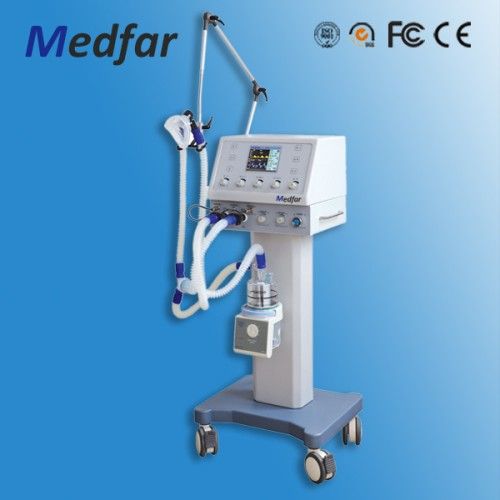
| 型号。 | MF-H-700A |
| 每分通风能力 | ≥18le;18升;18L |
| 呼吸机一致性 | ≤3≤3;3≤3 |
| 商标 | medfar |
| 起源 | 山东 |
| 潮气量调整 | 50〜1500毫升 |
| 氧气浓度 | 21%~100% |
| 呼吸频率 | 1~99/M |
| 规范 | ce&isop;异; ISO |
产品名称:医院设备保护通风机MF-H-700
简介:本款多功能多功能通用同步机通风机可用于辅助呼吸辅助治疗,采用明亮的数字显示技术,快速旋钮设定参数,外置单红外传感器,压力触发装置与先进的加热加湿器,机器通过CE认证。
产品规格
气动功率控制,微电脑控制
操作控制面板,LED显示屏清晰,操作方便
高品质加湿器
优质管道,配件,零件
呼吸机主机:
适用范围:大人,儿童
驱动:气动功率控制
旋钮操作和触摸键
工作时间:切换时间
呼吸方式:IPPV,SIPPV,IMV,SIMV,PEEP,Manu,Sigh等;
潮气量调节:50〜1200ml
呼吸频率:6〜60 / m
I / E比:1:1.5,1:2.0,1:2.5,1:3
(Ptr)范围:-0.4〜1.0kPa
上限压力:1〜6KPa
窥视:0.1〜1kpa
氧气浓度:<45%;45%
从控制到辅助呼吸的转移时间:6s
空气流量调节:1〜12次/ m
叹气量:潮气量的150%
每分钟通气量:≥18L; 18L;18L
最大安全压力:≤6.0kPa0kPa0kPa
供气范围:280〜600kPa
监测参数:潮气量,分钟通气量,总频率,气道压力峰值,氧浓度,自触发
报警参数:缺氧供气,气道压力上限气道压力极限,功率,持续压力,窒息,低潮气量,氧浓度,气体缺失
氧气消耗:12250kPa / 40L.40L氧气瓶运行1小时后压力变化≤1.5mPa。40L.
电源:AC220V,50Hz
加湿器:
温控器调节
自动过温断电保护
3.3报警系统
设备报警系统提供高级和低级报警。监测压力报警的原理是压力传感器实时测量和比较当前呼吸机气道压力与设定值。用于监测潮气量和通量报警的原理是流量传感器实时检测并比较通气机测得的值与设定值。监测氧浓度的原理是在氧气中发生化学反应,产生将由电路的AD获得的电压并进行转换,并将该值与设定值实时比较。频率报警监控的原理是计算当前呼吸机运行频率,并根据呼吸机CPU的定时与设定值进行比较。监控低电池电压报警的原理是电路的AD获取并检测电池电压是否低于10.5V。
报警列表如下:
警报列表
| 报警项目 | 报警级别 | 报警条件 | 报警表 |
| 低气源压力 | 高 | 气源压力降至0.2MPa以下。 | |
| 上气道压力极限 | 范围:0.9〜5.4 KP a,允许偏差:±20%(设定值的90%)t值)t value) | 立即报警“高电平报警”指示灯闪烁提示声音报警。 | |
| 持续正压 | 气道压力超过15hpa。 | 最大延迟时间不超过17秒。 “高电平报警”指示灯闪烁提示声音报警。 | |
| 潮气量低 | 中 | 低于50ml | 一个呼吸周期后,警报将提高。 “中等水平报警”指示灯闪烁提示声音报警。 |
| 气道压力下限 | 气道压力下降到0.5KPa。允许偏差为±0.2 KPa.0.2 KPa。0.2 KPa. | 警报将在延迟4至15秒后提高。 “中等水平报警”指示灯闪烁提示声音报警。 | |
| 吞吐量上限上限 | 吞吐量高于18L / min。 | 立即报警“中等水平报警”指示灯闪烁提示声音报警。 | |
| 电池电压 | 电池电压低于10.5V。 |
当呼吸机前面板上的“中高级报警”指示灯闪烁时,表示报警提高。您可以按静音键使报警静音,并再按一次以解除静音。
如果需要查询报警信息,可以按住“Silence”键3秒以上,并且通风机可以在吞吐量窗口上显示当前的报警信息。符号名称如下:
P上限上限报警限值;
P下限报警下限;
U上限上限报警限制;
宝低气道压力报警器;
CP高压连续压力报警
12.0电池电压值
您可以按静音键切换当前发生的报警信息。如果没有报警,电池电压将被直接调用。显示电池电压后,再次按静音键退出先前状态并显示吞吐量,或者如果在6秒钟内未按下键,系统将自动退出以前的状态并显示吞吐量。
3.4电池
该呼吸机配有内部备用电源,电压12V±10%,额定容量7Ah,最大电流2A。完全充电的电池可以支持该呼吸机的操作持续时间不少于30分钟。在实用主机故障的情况下,该呼吸机可以自动切换到内部电源供电。供应。 supply.
3.5工作噪音等级
此呼吸机正常工作时的噪音水平不得高于65 dB。
3.6安全要求
符合GB 9706.1-2007医疗器械分类要求第1部分:一般安全要求:
A)通过电击保护型
- 类型I设备。
- 内部供电装置。
B)按防触电程度
- 类型B应用程序
C)防止液体侵入的防护等级
- 通用(IPX0)
D)通过操作模式
- 连续运行
E)本产品没有配备防止除颤和放电效果的应用部件。
F)本产品没有信号输出和输入部件。
G)本产品是可移动的装置。
H)本产品不具防爆性,因此不能在易燃和易爆的麻醉气体环境中使用。
4.安装和调试
注意:该呼吸机应由具有一定资质的专业人员进行安装,调试,检查和使用,以避免意外的故障或损坏。
4.1安装前的准备工作
确认该通风机及其配件完好无损,运输过程中没有损坏,包装箱内容物与包装清单一致。妥善保管包装箱中的阻尼垫,用于其他运输工具。
了解如何使用此呼吸机的前后控制面板。检查压力表指针的位置。如果指针不在零点,则用螺丝刀调整压力表上的零点调整螺丝。
检查医用压缩氧源,确认其压力范围为280〜600KPa,流量为50L / min。如果用气瓶供氧,则还需要检查并确保气瓶充足的氧气,并且气缸上的减压器功能正常并正确安装。
检查并确保用于此呼吸机的单相交流电源电压为AC 220V±10%电压,并牢固接地保护,并确保应急电池已正确连接。rrectly.
在首次使用之前,您需要检查相应的部件是否按照本用户手册第8部分所述的方法进行清洗和消毒。
4.2呼吸机的安装和预调节
1)将呼吸机支撑架安装在呼吸机支架上,并将脚轮安装在支架底座的四个角处。
2)使用螺丝将呼吸机的底板连接到机架的支架上。
3)将电池盒安装在框架上,并将电池的引线与呼吸机后面板上的端子螺丝连接。
4)将两个导气螺旋管分别连接到呼吸机的吸气出口和呼气入口,将这些管的另一端连接到三通管,并将该T形管连接到试验肺。
5)使用管子将管道上的压力信号接口连接到呼吸机电路外壳前面板上的“压力信号输入接口”。
6)将流量传感器安装在“过期螺丝管适配器”和螺旋管之间,并将传感器的输出信号线连接到呼吸机电路套管回路外壳前面板上的“流量信号输入接口”。
7)将“潮气量调节”旋钮转到中间位置。
8)将IPPV频率设置为20次/分。
9)将“灵感触发压力”设置为-0.2 kPa.o -0.2 kPa。
10)将气道压力限制设定为4.0kPa。
11)将医用压缩氧源连接在280〜600kPa的压力范围内。
12)上述调整完成后,可以连接呼吸机的电源。
4.3呼吸机测试操作
连接呼吸机的气源和电源后,打开电源启动呼吸机,应注意:
1)呼吸机在以前关闭的通气模式下运行。
2)在启动后一分钟,必须显示“自发呼吸频率”,“整体呼吸频率”,“吞吐量”等参数,每分钟刷新一次,每分钟刷新一次。
3)气道压力指标不超过4.0kPa。
4)呼气指示器和吸气指示灯交替闪烁,您可以听到呼吸机中电磁阀的闭合声音。电磁阀关闭和打开的频率和指示灯闪烁是“控制频率”的指示值。此外,您可以看到测试肺中水柱的高度在控制频率处交替增加和减少。频率。
5)试验肺部潮气量的指标值与呼吸机“潮气量”基本相同,两者之间的相对误差不超过±20%,超过±20%。d ±20 %.
4.4检查和报警
- 将三通管堵塞以增加气道压力,并且当气道压力增加到上限压力时,应注意呼吸机产生可视报警信号。
- 切断正常操作的呼吸机的氧气瓶供氧,您应该观察气道压力指示是否下降。当气道压力指示下降到低于气道压力下限的水平时,在5至8秒的延迟之后,呼吸机产生可听见的报警信号。
- 正常工作的呼吸机会在电源中断时发出嗡嗡声警报。
- 检查报警声音的持续时间不得小于120秒。
- 如果发生报警,请连续按下微动拨盘两次,报警器将被静音。但是,如果故障未消除,则报警蜂鸣声会在不超过120秒的时间内再次发出声音。
使用和操作
5.1注意使用
1)在使用此呼吸机之前,必须检查并阅读其使用记录和洗涤消毒记录,并确保其不仅在良好状态下具有良好的性能,而且被彻底清洗和消毒。
2)使用前,必须检查并确认现场电源和气源是否符合4.1中的说明,并且必须按照4.3中描述的方式检查呼吸机的所有功能是否正常, 4.4。
3)在将此呼吸机用于患者之前,必须通过将其连接到试验肺来正确调整所有操作参数。详情见5.2。
4)医务人员在使用此呼吸机时必须进行现场监测。注意该呼吸机的运行状态,监护医师必须注意患者的生命体征和血气分析数据,并将呼吸机调整到最适合患者需要的运行状态,以获得最佳的医疗效果。
5)如果氧气供应氧气瓶,可以使用氧气减压器。您应该将压力调节手柄调整到最小水平位置,然后打开氧气瓶上的主开关,然后缓慢调节压力调节手柄,直到达到所需的压力。关闭气源,然后关闭呼吸机电源。
6)启动前,检查空气源和氧源的压力,并将其稳定在0.4MPa左右。
5.2设置通风方式
5.2.1辅助/控制模式;模式
“辅助/受控”模式是呼吸机启动时运行的默认模式。启动。
这种模式主要用于无或弱或间歇性自发呼吸的患者。如果患者没有自发呼吸,呼吸器按照设定的参数提供患者的间歇性正压通气,这种通气模式即称为受控通气模式。当自发呼吸恢复到一定程度时,呼吸器的呼吸与患者的自发呼吸自动同步,这种通气模式称为辅助通气模式。控制通气和辅助通气模式以6s间隔相互切换。
操作参数应按照以下步骤在试验肺上预设:
1)连接气源和电源,确认呼吸机在“辅助/控制”模式下运行,相应的指示灯继续运行。
2)调整“调整IPPV频率”旋钮,“控制频率”数字显示将提供相应的指示。
3)根据患者的需要选择I:E比例。
4)调整“调节潮气量”旋钮,观察“潮气量”指示灯,并根据需要设定潮气量。对于成年患者,根据每kg体重的10mL值进行初始设定,然后根据病人的实际情况对该值进行微调。
5)气道压力指示器实时显示气道压力的变化。根据气道压力峰值仔细调整“气道压力极限”,将气道压力限制设置为略高于峰值压力.k压力。
6)设置“灵感触发压力”。当患者的自发呼吸恢复到一定程度时,吸气触发压力将向呼吸器提供通气同步信号。同时,每当患者自发呼吸时,触发压力指示器的灵感一次闪烁。通常,当患者没有自发呼吸时,吸气触发压力可以设定为比最小气道压力低0.1kPa。呼吸。
7)调整“PEEP”旋钮,观察到期结束时显示的最小气道压力,并判断PEEP的设定是否合适。调整范围为0.1〜1.0 kPa .1〜1.0 kPa。
8)选择“标志”按钮并选择此功能后,呼吸机在80度通气的情况下,以大潮气量(不低于设定值的1.5倍)提供一次通气。
只有在完成上述设置后,您才能取出试验肺并将呼吸机与患者连接起来。
将呼吸机与患者气道连接后,应仔细观察患者的症状和肺通气情况,并根据监护仪和动脉血气分析数据进一步精细调整呼吸器的手术状态,以达到最佳通气影响。
5.2.2受控模式;模式
此模式仅适用于无自发呼吸的患者。
按“选择通风模式”键启用“控制”指示灯,呼吸机进入此操作模式。 “自发呼吸频率”数字显示不提供任何表现,因为没有自发呼吸,其他显示器仍然显示相应的内容。此模式下的操作参数设置与5.2.1.e中的相同,与5.2.1中的相同。
在此模式下,您仍然可以选择(或不选择)PEEP和Sigh功能。
5.2.3 imv模式
这种通气模式是用于自发呼吸的患者。它可以逐渐减少患者对呼吸机的依赖,以便于患者从呼吸机断奶。在该模式下,以一定间隔进行一次强制通气。在强制通风完成后,下一次强制通风在一段时间后进行。在两次强制通气的间隔期间,患者可以以自己的呼吸频率自发呼吸。
强制通风发生的时间间隔取决于“IMV”频率的设定。频率。
1)按“选择通气模式”键选择“间歇性强制通气”模式,相应的指示灯亮起.ng指示灯亮起。
2)调整IPPV频率,呼吸频率,潮气量,压力极限,自发吸气触发压力等参数,确保患者达到最佳呼吸指标。
3)您应该将“灵感触发压力”旋钮从“0 kPa”逐渐调整到“-0.4kPa”,以锻炼和控制患者的自主呼吸力和呼吸量。在这种模式下,潮气量应该以更精细的模式进行调整,因为潮气量可以在呼吸时间,呼吸频率,吸气潮量等其他相关寿命指数的启发触发压力的影响下改变患者的呼吸参数。和其他相关生活指数。
4)在此模式下,您仍然可以选择(或不选择)PEEP和Sigh功能。
5.2.4手动通风模式;模式
如果呼吸机的交流电源关闭,呼吸机可以操作紧急电池。电池的输出电压在运行中逐渐下降。如果这种输出电压下降到不足以驱动呼吸机运行的水平,则应该在充足电力的时候更换电池。如果您无法更换新的电池,或者在找不到新电池的紧急情况下,您可以应用“手动通风”模式。模式。
这种模式需要由具有丰富临床经验的医生操作。该医师应按照一定的节奏按“手动控制的通气”按钮,以简单地维持患者的呼吸。每次医师按下按钮,呼吸机通气一次,通气时间,潮气量,回路压力等参数由医师完全手动控制。医师。
当按下按钮时,医师必须密切注意患者的肺通气量和气道压力表上的指示。呼吸机使用气动压力表,并且在突然电源故障的情况下,这种量规不会受到影响。
5.3使用加湿器
加湿器不是此呼吸机的标准附件,用户需要根据实际需要可选购买。
对于使用人造气道或长时间使用呼吸机的患者,应将增湿器串联连接在通气管上,以增加混合气体的温度和湿度。加湿器的内部水温应根据患者的需要仔细调整。通常,加湿器的水温应确保患者吸入的气体温度范围为32ºC至35ºC,不超过40ºC。尽管如果温度较高,湿度较高,过高的温度会对患者造成不良反应,严重时也会引起呼吸道灼伤。in severe cases.
使用加湿器时,还要注意加湿器的出口温度和水量,以防止干燥。
5.4停电时的运行时间延长
这种呼吸机能够延长电源故障时的运行时间:当交流电源关闭时,呼吸机将自动切换到对电池的操作。此时,“电池操作”指示灯亮起。交流电源恢复后,呼吸机将自动切换到交流电源,“电池操作”指示灯熄灭,呼吸机电源电路以涓流方式对电池充电。以涓滴的方式。
需要注意的是电池容量有限,只能用作紧急电池。如果您需要长时间使用呼吸机对电池进行操作,则必须选择容量大的电池(电池组)。
有关电池使用和维护的进一步说明,请参阅本用户手册第9.2节。
5.5关机操作
当患者的各种重要指标符合关机要求时,可以断奶呼吸机。
断奶前应先拔下与患者连接的三通管,并观察患者的自发呼吸。只有在自发呼吸完全恢复后,您才能取出面罩或拔出气管插管,然后关闭呼吸机。您不得关闭呼吸机,然后取下三通管。
呼吸机使用后应立即进行清洗和消毒,然后一定要维修保养。
6.Troubleshooting
| 症状 | 可能的原因 | 解 |
| 呼吸机潮气量不稳定或不显示 | 流量传感器受强光干扰 | 避免流量传感器中的叶轮直接强光 |
| 流量传感器接触不良 | 重新连接流量传感器或更换插头 | |
| 通风电路连接不正确 | 重新连接通风回路 | |
| 通气电路泄漏,患者出现氧气缺乏 | 检查加湿器是否拧紧,以及通风回路是否泄漏 | |
| 水汽在叶轮中存在 | 拆卸,清洗和空气干燥的叶轮 | |
| 气源压力太低 | 加压压缩空气源,确保气源压力为0.35〜0.5MPa | |
| PEEP设置是不合适的 | 设置正确的PEEP | |
| 灵感触发压力设置是不合适的 | 设定正确的吸气触发压力 | |
| 灵感高原的设置是不合适的 | 设定正确的灵感高原 | |
| 流量传感器损坏 | 更换流量传感器 | |
| 氧气压力表或笑声压力表的指示是不准确的 | 输入气源压力过低 | 调整气源压力 |
| 呼吸道漏电 | 检查电路连接器并重新安装,并更换泄漏的插管。 | |
| 内部压力调节阀处于故障状态 | 重新调整压力调节阀或更换 | |
| 机器工作频率太快 | 频率设定过高或不适当地设定吸气触发压力 | 将工作频率调整到正确的水平,并将吸气触发压力设置为负值 |
| 潮气量下限报警 | 潮气量设定得太低 | 将潮气量设置在适当的范围内。 |
| 上限潮量限报警 | 潮气量设定得太高 | 将潮气量设置在适当的范围内。 |
| 呼吸机气道压力报警和气道压力限制图标突出显示,上呼吸道压力限制报警继续打开 | 潮气量和I:E比率没有适当调整。 | 调整I:E比和潮气量 |
| 上限压力不高 | 调整上限压力 | |
| 患者的自发呼吸与机械通气相冲突 | 设定正确的吸气触发压力 | |
| 患者气管痉挛或气道阻力由秘密增加 | 推荐使用患者的痰吸,并使用祛痰药 | |
| 呼吸机气道压力报警图标突出显示,气道压力下限报警继续打开。 | 潮气量设定为太小。 | 调整潮气量 |
| 氧气瓶或中央供氧的压力不足 | 设置正确的压力下限 | |
| 氧气瓶或中央供氧的压力不足 | 更换氧气瓶或增加气源压力 | |
| 氧气瓶减速机或氧气输送回路故障 | 更换氧气瓶,减压器和氧气输送回路。 | |
| 压力信号管被分离或水积聚在管中 | 重新连接信号管或排水 | |
| 连续的声音报警 | 交流电源关闭后,电池电量耗尽或电池电量损坏。 | 用足够的电量更换电池 |
| 呼吸机黑屏 | 变频器损坏 | 更换变频器 |
| 液晶屏损坏 | 更换液晶显示屏 | |
| 呼吸机空白屏幕 | 液晶屏幕电线接触不良 | 重新连接液晶屏幕线 |
| 控制块已损坏 | 更换控制块 | |
| 快速供氧阀不提供气体 | 快速供氧阀的弹簧卡扣,密封环干燥或阀门含有杂物。 | 调整或更换弹簧并将凡士林应用于密封圈并清除杂物。 |
| 快速供氧阀一直输出气体 | 密封环是老化的或快速的氧气供应阀在压下后不能缩回 | 重新调整,安装或更换 |
| 加湿器不能工作 | 交流电源未连接 | 重新连接交流电源 |
| 保险丝烧毁 | 更换保险丝 | |
| 加湿器一直在加热 | 加热棒已损坏 | 更换加热棒 |
| 电网正常时,电池工作 | 交流电源插头未连接 | 连接电源插头 |
| 保险丝烧毁 | 更换保险丝 | |
| 接线板或电源线损坏 | 更换接线板或电源线 |
| Model NO. | MF-H-700A |
| Ventilation Capacity Per Minute | ≥18Le;18L;18L |
| Ventilator Conformance | ≤3≤3;3≤3 |
| Trademark | MEDFAR |
| Origin | Shandong |
| Tidal Volume Adjustment | 50~1500ml |
| Oxygen Concentration | 21%~100% |
| Respiratory Rate | 1~99/M |
| Specification | CE & ISOp; ISO; ISO |
Product Name:Hospital Equipment Protable Ventilator MF-H-700
Intro:This paragraph ventilator for the multi-mode multi-function universal synchronous machine can be used to aid breathing and adjuvant therapy, the use of bright digital display technology, quick knob to set parameters, external single infrared sensor, a pressure trigger device with advanced heating humidifier, machine through the CE certification.
Specifications
Pneumatic power control, microcomputer control
Operation control panel with clear LED display, easy to operate
High quality humidifier
High-quality pipeline, accessories, parts
Ventilator host:
Scope: adults, children
Drive: pneumatic power control
knob operation and touch key
Work: time to switch
Breathing Mode:IPPV, SIPPV, IMV, SIMV, PEEP, Manu, Sigh and so on;
Tidal Volume Adjustment:50~1200ml
Respiratory Rate:6~60/m
I/E ratio: 1: 1.5, 1:2.0, 1:2.5, 1:3
(Ptr) Range:-0.4~1.0kPa
The upper pressure limit: 1 ~ 6KPa
PEEP: 0.1 ~ 1KPa
Oxygen Concentration:<45%;45%
Transfer Time from Controlled to Assistant Respiration:6s
Air Flow Adjustment:1~12times /m
Sigh Volume:150% of tidal volume
Ventilation Capacity per Minute:≥18L;18L;18L
Maximum Safe Pressure:≤6.0kPa0kPa0kPa
Air supply range:280~600kPa
Monitoring parameters: tidal volume, minute ventilation, the total frequency, peak airway pressure, oxygen concentration, self-triggering
Alarm parameters: the lack of oxygen supply, airway pressure upper limit airway pressure limit, power, sustained pressure, asphyxia, low tidal volume, oxygen concentration, gas missing
Oxygen Consumption:≤1.5mPa change in pressure after 1-hour operation of oxygen cylinder of 12250kPa/40L.40L.40L.
Power supply: AC220V, 50Hz
Humidifier:
Thermostat regulated
Automatic over-temperature power-off protection
3.3 Alarm System
The device alarm system provides high level and low level alarms. The principle for monitoring for pressure alarm is that a pressure sensor measures and compares the current ventilator airway pressure with the set value in real time. The principle for monitoring for tidal volume and throughput alarms is that a flow sensor detects and compares the value measured by the ventilator with the set value in real time. The principle for monitoring for oxygen concentration is that a chemical reaction occurs in the oxygen to generate a voltage which will be acquired by the AD of the circuit and converted and such value is compared with the set value in real time. The principle for monitoring for frequency alarm is that the current ventilator operation frequency is calculated and compared with the set value by timing on ventilator CPU. The principle for monitoring for low battery voltage alarm is that the AD of the circuit acquires and detects whether the battery voltage is lower than 10.5V.
A list of alarms is presented as below:
List of Alarms
| Alarm Item | Alarm Level | Alarm Condition | Alarm Form |
| Low gas source pressure | High | The gas source pressure drops to a level below 0.2MPa. | |
| Upper airway pressure limit | Range: 0.9 ~ 5.4 KP a, permissible deviation: ±20% (90% of set value)t value)t value) | Immediate alarm; 'high level alarm' indicator flickers raising an audible alarm.ible alarm. | |
| Continuous positive pressure | The airway pressure exceeds 15hpa. | The maximum delay is no longer than 17s. The 'high level alarm' indicator flickers raising an audible alarm.ible alarm. | |
| Low tidal volume | Medium | Lower than 50ml | The alarm will be raised after one breathing cycle. The 'medium level alarm' indicator flickers raising an audible alarm.ible alarm. |
| Lower airway pressure limit | The airway pressure drops to 0.5KPa. The permissible deviation is ±0.2 KPa.0.2 KPa.0.2 KPa. | The alarm will be raised after a delay of 4 to 15s. The 'medium level alarm' indicator flickers raising an audible alarm.ible alarm. | |
| Upper throughput limit | The throughput is higher than 18L/min. | Immediate alarm. The 'medium level alarm' indicator flickers raising an audible alarm.ible alarm. | |
| Battery voltage | The battery voltage is lower than 10.5V. |
When the 'high and medium level alarm' indicators on the front panel of the ventilator flicker, this indicates that alarms are raised. You can press the Silence key to silence the alarm and press it again to disarm silencing.m silencing.
If you need to query the alarm information, you can press and hold the Silence key for more than 3s and the ventilator can show the current alarm information on the throughput window. The symbol designation is as follows:
P upper limit upper pressure alarm limit;
P lower limit lower pressure alarm limit;
U upper limit upper throughput alarm limit;
Po low airway pressure alarm;
CP High continuous pressure alarm
12.0 Battery voltage value
You can switch the information of the alarm currently occurring by pressing the Silence key. In case of no alarm, the battery voltage will be directly invoked. After the battery voltage is displayed, press the Silence key again to exit the previous status and display the throughput, or, the system will automatically exit the previous status and display the throughput if you do not press a key within 6s.
3.4 Battery
This ventilator is equipped with an internal backup power supply of the voltage 12V ± 10%, rated capacity 7Ah and maximum current 2A. The fully recharged battery can support the operation of this ventilator for a duration of no less than 30min. In case of a utility main failure, this ventilator can automatically switch to operate on the internal power supply. supply. supply.
3.5 Operating Noise Level
The noise level when this ventilator normally operates is no higher than 65 dB.
3.6 Safety Requirements
In accordance with the classification requirements in GB 9706.1-2007 Medical Electrical Devices Part 1: General Safety Requirements:
A)By electric shock protection type
--Type I device.
--Internal power supply device.
B)By degree of electric shock protection
--Type B application
C)By degree of protection against liquid intrusion
--Common (IPX0)
D)By operating mode
--Continuous operation.
E)This product is not equipped with an application part for protection against defibrillation and discharge effects.
F)This product is not equipped with signal output and input parts.
G)This product is a movable device.
H)This product is not explosive-proof and thus cannot be used in an environment with combustible and explosive anesthetic gases.
4.Installation and Commissioning
Caution: this ventilator should be installed, commissioned, inspected and used by professionals with certain qualifications to avoid unexpected faults or damages.
4.1 Preparations Prior to Installation
Confirm that this ventilator and its fittings are in complete and good condition free from damage during transportation and that contents of the packing box are consistent with the packing list. Keep properly the damping cushions in the packing box for use in another transportation.
Learn how to use the front and rear control panels of this ventilator . Check the position of the pointer of the pressure gauge. If the pointer is not at zero point, then adjust the zero point adjustment screw on the pressure gauge by using a screwdriver.
Check the medical compressed oxygen source and make sure that its pressure ranges from 280 to 600KPa and flow rate is 50L/min. If you supply oxygen with a cylinder, then you also need to check and make sure that the cylinder is sufficient of oxygen, and that the pressure reducer on the cylinder functions well and is correctly installed.
Check and make sure that the single-phase AC power supply used for this ventilator is of the AC 220V±10% voltage and securely grounded for protection and make sure that the emergency battery is already connected correctly.rrectly.rrectly.
Before the first use, you need to check whether the corresponding components are washed and disinfected following the method as specified in Section 8 of this user manual.
4.2 Installation and Pre-adjustment of Ventilator
1)Install the ventilator support holder onto the ventilator bracket and mount casters at four corners of the bracket base.
2)Connect the base plate of the ventilator on the support holder of the frame by using screws.
3)Install the battery box on the frame and connect the lead wires of the battery to the terminal screws on the rear panel of the ventilator.
4)Connect two gas guiding screw tubes to the inspiration outlet and expiration inlet of the ventilator respectively, connect the other ends of these tubes to a tee tube and connect that tee tube to a test lung.
5)Connect the pressure signal interface on the tee tube to the 'pressure signal input interface' on the front panel of the ventilator circuit casing by using a tube.ing a tube.
6)Install the flow sensor between the 'expiration screw tube adapter' and screw tube and connect the output signal wire of the sensor to the 'flow signal input interface' on the front panel of the ventilator circuit casing.lator circuit casing.
7)Turn the 'tidal volume adjustment' knob to the middle position.e position.
8)Set the IPPV frequency to 20times/min.
9)Set the 'inspiration triggering pressure' to -0.2 kPa.o -0.2 kPa.
10)Set the airway pressure limit to 4.0kPa.
11)Connect the medical compressed oxygen source with a pressure ranging from 280 to 600kPa.
12)When the above adjustment is completed, you can connect the power supply of the ventilator.
4.3 Test Operation of Ventilator
After connecting the gas source and power supply of the ventilator and turning on the power to start up the ventilator, you should observe:
1)That the ventilator operates in the ventilation mode in which it is shut down previously.
2)Such parameters as 'spontaneous breathing frequency', 'overall respiratory rate', 'throughput', etc. have to be displayed one minute after the startup as they are refreshed once every minute.re refreshed once every minute.
3)The indication of the airway pressure does not exceed 4.0kPa.
4)The expiration indicator and inspiration indicator flicker alternatively and you can hear the close-open sound of the solenoid valve in the ventilator. The frequency at which the solenoid valve closes and opens and the indicators flicker is the indicative value of the 'control frequency'. Also, you can see that the height of the water column in the test lung increases and decreases alternatively at the control frequency. frequency.
5) The indicative value of the tidal volume on the test lung is substantially the same as that of the 'tidal volume' on the ventilator and relative error between both does not exceed ±20 %.ceed ±20 %.d ±20 %.
4.4 Inspection and Alarm
--Block the tee tube to increase the pressure in the airway and you should observe that the ventilator generates an audible-visual alarm signal when the airway pressure increases to the upper pressure limit.
--Cut off the oxygen supply from the oxygen cylinder for a normally operating ventilator and you should observe that the airway pressure indication drops. When the airway pressure indication drops to a level below the lower airway pressure limit, after a delay of 5 to 8s the ventilator generates an audible-visual alarm signal.
--A normally operating ventilator will raise a buzzing alarm when the power supply is interrupted.
--The duration of the inspection alarm sound should be no shorter than 120s.
--In case of an alarm, continuously press the jog dial twice and the alarm will be silenced. But, if the fault is not eliminated, the alarm buzz will sound again within a time no longer than 120s.
5.Use and Operation
5.1 Attention for Use
1)Prior to the use of this ventilator, you must check and read its use record and washing and disinfection record and make sure that it is not only in good condition with good performance but also is thoroughly washed and disinfected.
2)Prior to use, you must check and confirm whether the power supply and gas source in the field comply with requirements in accordance with the description in 4.1, and must check whether all functions of the ventilator are normal in accordance with descriptions in 4.3 and 4.4.
3)Prior to use of this ventilator on a patient, you must adjust properly all operating parameters by connecting it to a test lung. For details, see 5.2.
4)Medical staffs must provide field monitoring during the use of this ventilator. While pay attention to the operating status of this ventilator, the monitoring physician must pay attention to the vital signs and blood gas analysis data of the patient and adjust the ventilator to the operating status most adapting to the needs of the patient for optimal medical effect.
5)If oxygen is supplied with an oxygen cylinder, you may use an oxygen pressure reducer. You should adjust the pressure regulation handle to the minimum level position, then turn on the main switch on the oxygen cylinder and then slowly adjust the pressure regulation handle until the desired pressure is reached. Turn off the gas source and then the power to shut down the ventilator.
6)Prior to startup, check the pressures of the air source and oxygen source and they should be stabilized at a level around 0.4MPa.
5.2 Setting of Ventilation Modes
5.2.1Assisted/Controlled' Mode; Mode
The 'Assisted/Controlled' mode is the default mode in which the ventilator operates when it is started up.started up.
Such mode is mainly intended for patients with no or weak and intermittent spontaneous breathing. If the patient shows no spontaneous breathing, the respirator provides intermittent positive pressure ventilation of the patient following the set parameters, and this ventilation mode is namely called controlled ventilation mode. When the spontaneous breathing is recovered to a certain extent, the ventilation by the respirator is automatically synchronized with the spontaneous breathing in the patient, and this ventilation mode is namely called assisted ventilation mode. The control ventilation and assisted ventilation modes are switched to each other at an interval of 6s.
Operating parameters should be preset on the test lung following the procedures as follows:
1)Connect the gas source and power and confirm that the ventilator operates in the 'Assisted/controlled' mode and the corresponding indicators go on.tors go on.
2)Adjust the 'Adjust IPPV Frequency' knob and the 'Control Frequency' digital display will provide the corresponding indication.esponding indication.
3)Select an I:E ratio according to the needs of the patient.
4)Adjust the 'Adjust Tidal Volume' knob, observe the 'Tidal Volume' indicator and set the tidal volume to the value as needed. For adult patients, make the initial setting based on the value of 10mL per kg of body weight and then fine tune the value according to the actual conditions of the patient.tions of the patient.
5)The airway pressure indicator shows the variation in the airway pressure in real time. Carefully adjust the 'Airway Pressure Limit' according to the airway pressure peak to set the airway pressure limit to a level slightly higher than the peak pressure.k pressure.
6)Set the 'Inspiration Triggering Pressure'. When the spontaneous breathing in the patient is recovered to a certain extent, the inspiration triggering pressure will provide a ventilation synchronization signal to the respirator. At the same time, each time when the patient takes a breath spontaneously the inspiration triggering pressure indicator flickers once. Generally, the inspiration triggering pressure can be set to be a level 0.1kPa lower than the minimum airway pressure when the patient has no spontaneous breathing. breathing.
7)Adjust the 'PEEP' knob, observe the minimum airway pressure displayed when expiration ends and judge whether the setting of the PEEP is appropriate or not. The adjustment range is 0.1~1.0 kPa..1~1.0 kPa.
8) After selecting the 'Sign' button and select this function, the Sigh indicator goes on and the ventilator provides one ventilation at a big tidal volume (no less than 1.5 times of the set value) at an interval of 80 ventilations.ntilations.
Only upon completion of the above setting can you remove the test lung and connect the ventilator with the patient.
After connecting the ventilator with the airway in the patient, you should carefully observe the symptoms and lung inflation of the patient and further fine adjust the operation status of the respirator according to the monitor instrument and arterial blood and gas analysis data to achieve the optimal ventilation effect.
5.2.2 Controlled' Mode; Mode
This mode is only intended for patients with no spontaneous breathing.
Press the 'Select Ventilation Mode' key to enable the 'Control' indicator to be on and the ventilator enters this operating mode. The 'Spontaneous Breathing Frequency' digital display provides no presentation due to the condition that no spontaneous breath is taken and other displays still show the corresponding contents. The setting of the operating parameters in this mode is the same as that in 5.2.1.e is the same as that in 5.2.1.
In this mode, you can still select (or not select) the PEEP and Sigh functions.
5.2.3 IMV Mode
This ventilation mode is intended for spontaneously breathing patients. It can gradually reduce the patient's dependency on the ventilator to facilitate weaning of the patient from the ventilator. In this mode, the mandatory ventilation of the patient is performed once at a certain interval. Upon completion of mandatory ventilation, the next mandatory ventilation is performed a certain period of time later. During the interval between two mandatory ventilations, the patient can spontaneously breath at his own breathing rate.
The interval at which the mandatory ventilation occurs depends on the setting of the 'IMV' frequency. frequency.
1)Press the 'Select Ventilation Mode' key to select the 'Intermittent Mandatory Ventilation' mode and the corresponding indicator goes on.ng indicator goes on.
2)Adjust such parameters as IPPV frequency, respiratory rate, tidal volume, pressure limit, spontaneous inspiration triggering pressure, etc. to ensure that the optimal respiratory indexes needed by the patient are reached.
3) You should adjust the 'Inspiration Triggering Pressure' knob gradually from '0 kPa' to '-0.4kPa' to exercise and control the patient's spontaneous breathing efforts and respiratory volume. In this mode, the tidal volume should be adjusted in a finer mode because the tidal volume can change the patient's respiratory parameters under the impact by the inspiration triggering pressure such as the respiration time, respiratory rate, inspiratory tidal volume and other relevant life index. and other relevant life index.
4)In this mode, you can still select (or not select) the PEEP and Sigh functions.
5.2.4Manually Controlled Ventilation' Modet; Mode
In the event that the AC power supply to the ventilator is down, the ventilator can operate the emergency battery. The output voltage of the battery gradually drops during operation. If such output voltage drops to a level which is insufficient to drive the ventilator to operate, you should replace the battery with one with sufficient power in time. If you cannot replace with a new battery or in an urgent case when you cannot find a new battery, you can apply the 'Manually Controlled Ventilation' mode.quot; mode.
Such mode needs to be operated by a physician with rich clinical experiences. That physician should press the 'Manually Controlled Ventilation' button at a certain rhythm to simply maintain the respiration of the patient. Each time the physician presses the button the ventilator ventilates the patient once and such parameters as the ventilation time, tidal volume, circuit pressure, etc. are completely manually controlled by the physician. physician.
When pressing the button, the physician must pay close attention to the lung inflation of the patient and indication on the airway pressure gauge. The ventilator uses an pneumatic pressure gauge and such gauge will not be affected in case of a sudden power supply failure.
5.3 Use of Humidifier
The humidifier is not a standard accessory of this ventilator and the user needs to optionally purchase it according to actual requirements.
For a patient using an artificial airway or using a ventilator for a long time, a humidifier should be connected in series on the ventilation tube to increase the temperature and humidity of the mixed gas. The internal water temperature of the humidifier should be carefully adjusted according to the patient's needs. Generally, the water temperature of the humidifier should ensure that the temperature of the gas inhaled by the patient ranges from 32ºC to 35ºC and does not exceed 40ºC. Although the humidity is higher if the temperature is higher, a too high temperature will cause adverse reactions to the patient and respiratory tract burn to occur in severe cases.in severe cases.in severe cases.
During the use of the humidifier, you should also always pay attention to the outlet temperature and water volume in the humidifier to prevent dry burning.
5.4 Operation Time Extension Upon Power Failure
This ventilator is capable of extending the operation time in case of power failure: when the AC power supply is down, the ventilator will automatically switch to operate on the battery. At this time, the 'Operation on Battery' indicator goes on. After the AC power supply is resumed, the ventilator will automatically switch to operate on AC power supply, the 'Operation on Battery' indicator goes out and the ventilator power circuit charges the battery in a trickle manner. in a trickle manner.
What needs to be noted is that the battery has limited capacity and can be only used as emergency battery. If you need to have the ventilator operate on the battery for a long time, you must select one with large capacity (battery pack).
For the further description of the use and maintenance of the battery, please refer to Section 9.2 of this user manual.
5.5 Shutdown Operations
When the patient's various vital indexes comply with the shutdown requirements, you can wean the ventilator.
Before weaning the ventilator, you should remove the tee tube connected with the patient and observe the spontaneous breathing by the patient. Only after the spontaneous breathing is completely recovered can you remove the mask or extract the endotracheal tube and then shut down the ventilator. You must not shut down the ventilator and then remove the tee tube.
The ventilator should be immediately washed and disinfected after it is used and then should be necessarily serviced and maintained.
6.Troubleshooting
| Symptom | Possible Cause | Solution |
| Ventilator tidal volume is not stable or displayed | Flow sensor is interfered by strong light | Avoid impellers in the flow sensor from direct strong light |
| Flow sensor is in poor contact | Re-connect the flow sensor or replace the plug | |
| Ventilation circuit connection is incorrect | Re-connect the ventilation circuit | |
| Ventilation circuit leaks and the patient shows oxygen deficit | Check whether the humidifier is tightened and whether the ventilation circuit leaks | |
| Water vapor exists in the impellers | Remove, wash and air dry impellers | |
| Air source pressure is too low | Pressurize the compressed air source and ensure the air source pressure ranges from 0.35 to 0.5MPa | |
| PEEP setting is inappropriate | Set a correct PEEP | |
| Inspiration triggering pressure setting is inappropriate | Set a correct inspiration triggering pressure | |
| Inspiration plateau setting is inappropriate | Set a correct inspiration plateau | |
| Flow sensor is damaged | Replace the flow sensor | |
| Indication from the oxygen pressure gauge or laughing pressure gauge is inaccurate | Input air source pressure is too low | Adjust the air source pressure |
| Respiratory circuit leaks | Check the circuit connector and re-install, and replace the leaking cannula. | |
| Internal pressure regulator valve is in malfunction | Re-adjust the pressure regulator valve or replace | |
| The machine operating frequency is too fast | The frequency setting is too high or the inspiration triggering pressure is inappropriately set | Adjust the operating frequency to the correct level and set the inspiration triggering pressure to be negative |
| Lower tidal volume limit alarm | Tidal volume is set to be too low | Set the tidal volume to the appropriate range. |
| Upper tidal volume limit alarm | Tidal volume is set to be too high | Set the tidal volume to the appropriate range. |
| The ventilator airway pressure alarm and airway pressure limits icons are highlighted and the upper airway pressure limit alarm continues to be on | The tidal volume and I:E ratio are not properly adjusted. | Adjust the I:E ratio and tidal volume |
| The upper pressure limit is not | Adjust the upper pressure limit | |
| The patient's spontaneous breathing conflicts with the mechanical ventilation | Set a correct the inspiration triggering pressure | |
| The patient suffers tracheospasm or airway resistance is increased by secreta | Sputum suction of the patient is recommended and expectorant should be used | |
| The ventilator airway pressure alarm icon is highlighted and the airway pressure lower limit alarm continues to be on. | The tidal volume value is set to be too small. | Adjust the tidal volume |
| The pressure of the oxygen cylinder or central oxygen supply is insufficient | Set a correct lower pressure limit | |
| The pressure of the oxygen cylinder or central oxygen supply is insufficient | Replace the oxygen cylinder or increase the air source pressure | |
| The oxygen cylinder reducer or oxygen conveyance circuit is in malfunction | Replace the oxygen cylinder, reducer and oxygen conveyance circuit. | |
| Pressure signal tube is separated or water is accumulated in the tube | Re-connect the signal tube or drain the water | |
| Continuous audible alarm | The battery power is exhausted or battery is damaged after the AC power supply is down. | Replace with battery with sufficient capacity |
| Black screen of ventilator | Inverter is damaged | Replace the inverter |
| LCD screen is damaged | Replace the LCD screen | |
| Blank screen of ventilator | LCD screen wires are in poor contact | Re-connect LCD screen wires |
| Control block is damaged | Replace the control block | |
| Rapid oxygen supply valve does not provide gas | The spring of the rapid oxygen supply valve is snapped and the seal ring is dry or valve contains sundries. | Adjust or replace spring and apply Vaseline to the seal ring and clear sundries. |
| Rapid oxygen supply valve outputs gas all the time | Seal ring is aged or rapid oxygen supply valve cannot retract after being pressed | Re-adjust, install or replace it |
| Humidifier cannot work | AC power is not connected | Re-connect the AC power |
| Fuse is burnt out | Replace the fuse | |
| Humidifier is heating all the time | Heating rod is damaged | Replace the heating rod |
| Battery works when the grid power is normal | AC power plug is not connected | Connect the power plug |
| Fuse is burnt out | Replace the fuse | |
| Junction panel or power cord is damaged | Replace junction panel or power cord |

&img=www.atupapa.com/show/wxbuyer/img/apk.png&url=//www.atupapa.com/show/wxbuyer/whatnear.apk)