- Marketplace
- Merchants
- Restaurants
- UAE house
- Cloud accounting (GCC VAT)
- Me
- Cart
- My order
- Address book
- Favorite
- Link
- About us
- Download App
- 中文
- Merchant panel
Linocaine Pharmaceutical Raw Materials Linocaine Hydrochloride for Local Anaesthetic
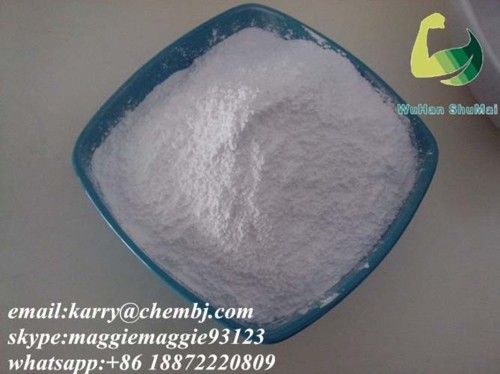
| Model NO. | 6108-05-0 |
| Customized | Non-Customized |
| Suitable for | Adult |
| Purity | >99% |
| Appearances | White Powder |
| Packaging Detail | Foil Bag with Discreet Package |
| Transport Package | 1kg Sterile Aluminum Foil Bag or Discreet |
| Origin | China |
| Powder | Yes |
| Certification | GMP, HSE, ISO 9001, USP, BP |
| State | Solid |
| Product Name | Linocaine Hydrochloride |
| Usage | Body Muscle Gain |
| Trademark | whsm |
| Specification | GMP, SGS, ISO, KOSHER |
| HS Code | 2937290090 |
Pharmaceutical raw materials Linocaine hydrochloride / Xylocaine for local anaesthetic
Quick detail;
English name; Linocaine hydrochloride
MF; C14H25ClN2O2
MW; 288.81
CAS; 6108-05-0
EINECS Number: 200-803-8
Lidocaine is a type of medicine called a local anaesthetic. It is used to numb areas that would otherwise feel pain.
Decriptions;
Gels, creams, and other topical treatments containing this compound are available without a prescription and can be used to relieve various kinds of itching, skin irritation, and pain. For example, lidocaine creams can be used to treat burns, sunburns, shingles, and jellyfish stings. It can also be used to relieve the pain of urethritis, a urinary tract inflammation. In hospitals, lidocaine jelly is used when a patient is intubated through the mouth or nose to numb the affected area when the tube is inserted.
This drug is also available in liquid form and is then often injected. An injection can be used to provide local anesthesia during minor surgical procedures like eye surgery, dental surgery, and throat surgery. It is also used to treat certain forms of heart arrhythmia, meaning conditions where the heartbeat is irregular because the chambers of the heart are not functioning properly. Lidocaine hydrochloride injections are only available by prescription and under medical supervision, as in a hospital, doctor's office, or medical clinic.
Application;
Lidocaine is a type of medicine called a local anaesthetic. It is used to numb areas that would otherwise feel pain.
Pain is caused by the stimulation of pain receptors at the ends of nerves. The stimulation causes sodium to enter the nerve ending, which causes an electrical signal to build up in the nerve. When this electrical signal is big enough, it passes along the nerve to the brain, where the signal is interpreted as pain.
Lidocaine works by temporarily blocking this pathway of pain signals along nerves. It does this by stopping the sodium entering the nerve ending at the site of the pain. This prevents an electrical signal building up and passing along the nerve fibres to the brain.
Lidocaine injection is also used in the emergency treatment of heart rhythm disturbances, particularly in cases of suspected or proven heart attack. It is given by intravenous infusion or intravenous bolus injection.
Quick detail;
English name; Linocaine hydrochloride
MF; C14H25ClN2O2
MW; 288.81
CAS; 6108-05-0
EINECS Number: 200-803-8
Lidocaine is a type of medicine called a local anaesthetic. It is used to numb areas that would otherwise feel pain.
Decriptions;
Gels, creams, and other topical treatments containing this compound are available without a prescription and can be used to relieve various kinds of itching, skin irritation, and pain. For example, lidocaine creams can be used to treat burns, sunburns, shingles, and jellyfish stings. It can also be used to relieve the pain of urethritis, a urinary tract inflammation. In hospitals, lidocaine jelly is used when a patient is intubated through the mouth or nose to numb the affected area when the tube is inserted.
This drug is also available in liquid form and is then often injected. An injection can be used to provide local anesthesia during minor surgical procedures like eye surgery, dental surgery, and throat surgery. It is also used to treat certain forms of heart arrhythmia, meaning conditions where the heartbeat is irregular because the chambers of the heart are not functioning properly. Lidocaine hydrochloride injections are only available by prescription and under medical supervision, as in a hospital, doctor's office, or medical clinic.
Application;
Lidocaine is a type of medicine called a local anaesthetic. It is used to numb areas that would otherwise feel pain.
Pain is caused by the stimulation of pain receptors at the ends of nerves. The stimulation causes sodium to enter the nerve ending, which causes an electrical signal to build up in the nerve. When this electrical signal is big enough, it passes along the nerve to the brain, where the signal is interpreted as pain.
Lidocaine works by temporarily blocking this pathway of pain signals along nerves. It does this by stopping the sodium entering the nerve ending at the site of the pain. This prevents an electrical signal building up and passing along the nerve fibres to the brain.
Lidocaine injection is also used in the emergency treatment of heart rhythm disturbances, particularly in cases of suspected or proven heart attack. It is given by intravenous infusion or intravenous bolus injection.
| Product Name | CAS | Product Name | CAS |
| Test Base | 58-22-0 | Drostanolone Propionate | 521-12-0 |
| Test Enanthate | 315-37-7 | Drostanolone enanthate | 472-61-1 |
| Test Acetate | 1045-69-8 | Methyldrostanolone | 3381-88-2 |
| Test Propionate | 57-85-2 | Methnolone Enanthate | 330-42-4 |
| Test Cypionate | 58-20-8 | Methnolone Acetate | 434-05-9 |
| Tes Phenylpropionate | 1255-49-8 | dianabol | 72-63-9 |
| Tes Isocaproate | 15262-86-9 | Tamoxifen Citrate | 54965-24-1 |
| Test Decanoate | 5721-91-5 | Clomifene Citrate | 50-41-9 |
| 17-alpha-Methyl-Test | 65-04-3 | Letrazole | 112809-51-5 |
| Stanolone | 521-18-6 | Tadalafil | 171596-29-5 |
| 17-Methyl-test | 58-18-4 | Dutasteride | 164656-23-9 |
| 4-Chlorotestosterone Acetate | 85-19-6 | Yohimbine HCI | 65-19-0 |
| Oral Turinabol | 2446-23-3 | Trenbolone Enanthate | 10161-33-8 |
| Nandrolone Decanoate | 360-70-3 | Boldenone Undecylenate | 13103-34-9 |
| Nandrolone phenylpropionate | 62-90-8 | MT-1 | 75921-69-6 |
| Tren | 10161-33-8 | Melanotan-2 | 121062-08-6 |
| Tren Acetate | 10161-34-9 | GHRP-2 | 158861-67-7 |
| Ghrp-6 | 87616-84-0 | Ipamorelin | 170851-70-4 |
| Hexarelin | 140703-51-1 | Sermorelin | 86168-78-7 |
| Oxytocin | 158861-67-7 | PT141 | 87616-84-0 |

&img=www.atupapa.com/show/wxbuyer/img/apk.png&url=//www.atupapa.com/show/wxbuyer/whatnear.apk)