- Marketplace
- Merchants
- Restaurants
- UAE house
- Cloud accounting (GCC VAT)
- Me
- Cart
- My order
- Address book
- Favorite
- Link
- About us
- Download App
- 中文
- Merchant panel
2 / 5 / 10 Mg / Vial Melanotan-1 Peptide Melanotan II Melanotan-2
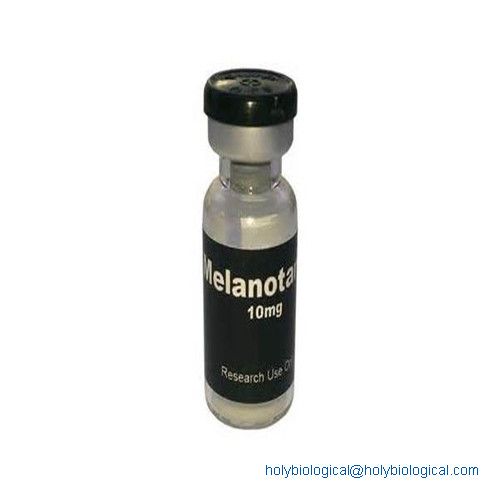
2 / 5 / 10 mg / vial Melanotan-1 Peptide Melanotan II Melanotan-2
Melanotan-1, 2mg/vial, 5mg/vial, 10mg/vial
CAS: 75921-69-6
MF: C78H111N21O19
MW: 1646.85
Chain: AC-Ser-Tyr-Ser-Nle-Glu-His-D-Phe-Arg-Trp-Gly-Lys-PRO-Val-NH2
Appearance: Sterile Filtered White lyophilized (freeze-dried) powder
Purity(by HPLC): ﹥99.00%~99.90%
Total Impurities(by HPLC): 1.00%~0.05%
Single Impurity(by HPLC): ﹤0.50%~0.08%
Origin: China (Mainland)
Storage conditions: Aviod shunshine and keeping stoppered
Specification:
Description:
Melanotan 1 (also referred to as Afamelanotide) is a synthetic peptide variant of a peptide hormone, called alpha-Melanocyte stimulating hormone or MSH that is naturally produced in the body and is responsible for stimulating melanogenesis, a peptide process for pigmentation of the skin. Alpha-MSH activates certain melanocortin receptors in the process of exerting its effects. Indeed, MSH also exerts potent influence over lipid metabolism, appetite, and sexual libido via these melanocortin receptors. As a result, Melanotan-1 sunless skin tanning effects. While Melanotan 2 and PT-141 have been studied at length as a potential remedies for the treatment of sexual dysfunction, Melanotan-1 has been researched extensively for use in protecting against the harmful effects of ultraviolet radiation from sunlight due to its melanogenesis-stimulating properties.
Both Melanotan-1 and Melanotan 2 are analogs of the peptide hormone alpha-melanocyte stimulating hormone (α-MSH) that tend to induce skin tanning. Unlike Melanotan 1, Melanotan 2 has been shown to have aphrodisiac properties, the additional effect of increasing libido. Melanotan-1 is a non selective agonist of the melanocortin receptors (MC1R,MC3-5R). As an analogue of α-MSH, its mechanism of action is biomimicry of the natural mammalian tanning process
The Development of Melanotan 1
The initial creation of the Melanotan 1 peptide tanning analogue can be credited to the University of Arizona. During the course of study aimed at developing a defense against skin cancer, focus was placed on developing a method of stimulating natural melanogenesis, or the natural production of melanin in the skin, without direct exposure to the potentially harmful ultraviolet radiation in sunlight. Initially, University of Arizona researchers attempted to directly administer the naturally occurring hormone alpha-MSH in order to elicit this desired result. Although this strategy exhibited promising results, it was determined that the naturally occurring MSH had a prohibitively short half-life to be of realistic use as a therapeutic remedy. However, the positive results gleaned from MSH administration encouraged further research into the development of Melanotan 1, which exhibits similar effects whilst possessing an extended half-life for functional therapeutic utilization. The researchers, headed by Victor J. Hruby and Mac E. Hadley, found a peptide, [Nle4, D-Phe7]-α-MSH, that was approximately 1,000 times more potent than natural α-MSH. They named this new peptide molecule 'Melanotan' (later Melanotan-1).
Melanotan-1 Mechanism of Action - How it Works!
Melanotan produces its photoprotective effects by triggering a 'signaling cascade' via its activation of the MC1R on melanin-producing cells known as melanocytes. Upon Melanotan binding with the MC1R on the surface of melanocytes in the epidermal layer of the skin, it begins a series of actions and reactions that result in melanocytes favoring the production of eumelanin (photoprotective black/brown pigment). The initial binding activates the MC1R leading to the activation of adenylate cyclase (AC) and stimulation of the production of cyclic adenosine monophosphate (cAMP). cAMP in turn activates protein kinase A (PKA) resulting in the phosphorylation of the cAMP response element-binding (CREB). Phosphorylated CREB will bind to the cAMP response element (CRE) on the microphthalmia-associated transcription factor (MITF) gene leading to the synthesis of the MITF protein. MITF has the ability to activate several genes by binding to them, including the MC1R gene and the genes involved in melanogenesis. This results in increased concentrations of the melanogenic enzymes within the melanocyte.
Melanotan may refer to one of two separate peptides : Afamelanotide, originally developed under the names 'Melanotan1' or 'Melanotan I' for skin tanning, a drug currently in trials in implant form as a prophylactic treatment for a series of light affected skin disorders and potential skin cancer preventative agent.
Melanotan II, a drug originally developed as a skin tanning agent, but subsequently investigated as a potential treatment for sexual dysfunction.
Melanotan 2 (also referred to as Melanotan II) is a synthetically produced variant of a peptide hormone naturally produced in the body that stimulates melanogenesis, a process responsible for pigmentation of the skin. This peptide hormone, called alpha-Melanocyte stimulating hormone or MSH, activates certain melanocortin receptors in the process of exerting its effects. Indeed, MSH also exerts potent influence over lipid metabolism, appetite, and sexual libido via these melanocortin receptors. As a result, Melanotan 2 has been shown in studies to exhibit appetite suppressant, lipolytic, and libido-enhancing effects in addition to promoting skin tanning. Melanotan 2 has been researched extensively for use in protecting against the harmful effects of ultraviolet radiation from sunlight due to its melanogenesis-stimulating properties.
Additionally, Melanotan 2 and a similar synthetically produced variant, known as PT-141, have been studied at length as a potential remedy for the treatment of sexual dysfunction; specifically, male erectile dysfunction.
Our Advantages:
Hubei Holy Biological Co., Ltd. has been developing and producing high quality products under stric GMP conditions. Quality control and quality assurance are given high priority in order to meet international pharmacopoeia specifications and special customer's requirements.
1. Method of Analysis for testing our materials are validated to give the re-producible results
2. All the analytical test procedures and manufacturing procedures are well documented and revision is undertaken as per specified protocol.
3. Trend analysis of purified water and final products are maintained.
4. Stability study is a very important area of quality assuance.
Our company has a strict QA&QC system and all of products are in line with the USP standard as well as enterprise internal control standard.
Other Peptides:
Melanotan-1, 2mg/vial, 5mg/vial, 10mg/vial
CAS: 75921-69-6
MF: C78H111N21O19
MW: 1646.85
Chain: AC-Ser-Tyr-Ser-Nle-Glu-His-D-Phe-Arg-Trp-Gly-Lys-PRO-Val-NH2
Appearance: Sterile Filtered White lyophilized (freeze-dried) powder
Purity(by HPLC): ﹥99.00%~99.90%
Total Impurities(by HPLC): 1.00%~0.05%
Single Impurity(by HPLC): ﹤0.50%~0.08%
Origin: China (Mainland)
Storage conditions: Aviod shunshine and keeping stoppered
Specification:
ITEM | SPECIFICATION |
Appearance | White Crystalline Powder |
Assay | ≥99% |
Heavy Metals | ≤10ppm |
Arsenic | ≤1ppm |
Lead | ≤3ppm |
Mercury | ≤0.1ppm |
Cadmium | ≤1ppm |
Total Plate Count | ≤1000cfu/g |
Yeast & Mold | ≤100cfu/g |
E.Coli | Negative |
Salmonella | Negative |
Conclusion | The product conforms to the standard. |
Description:
Melanotan 1 (also referred to as Afamelanotide) is a synthetic peptide variant of a peptide hormone, called alpha-Melanocyte stimulating hormone or MSH that is naturally produced in the body and is responsible for stimulating melanogenesis, a peptide process for pigmentation of the skin. Alpha-MSH activates certain melanocortin receptors in the process of exerting its effects. Indeed, MSH also exerts potent influence over lipid metabolism, appetite, and sexual libido via these melanocortin receptors. As a result, Melanotan-1 sunless skin tanning effects. While Melanotan 2 and PT-141 have been studied at length as a potential remedies for the treatment of sexual dysfunction, Melanotan-1 has been researched extensively for use in protecting against the harmful effects of ultraviolet radiation from sunlight due to its melanogenesis-stimulating properties.
Both Melanotan-1 and Melanotan 2 are analogs of the peptide hormone alpha-melanocyte stimulating hormone (α-MSH) that tend to induce skin tanning. Unlike Melanotan 1, Melanotan 2 has been shown to have aphrodisiac properties, the additional effect of increasing libido. Melanotan-1 is a non selective agonist of the melanocortin receptors (MC1R,MC3-5R). As an analogue of α-MSH, its mechanism of action is biomimicry of the natural mammalian tanning process
The Development of Melanotan 1
The initial creation of the Melanotan 1 peptide tanning analogue can be credited to the University of Arizona. During the course of study aimed at developing a defense against skin cancer, focus was placed on developing a method of stimulating natural melanogenesis, or the natural production of melanin in the skin, without direct exposure to the potentially harmful ultraviolet radiation in sunlight. Initially, University of Arizona researchers attempted to directly administer the naturally occurring hormone alpha-MSH in order to elicit this desired result. Although this strategy exhibited promising results, it was determined that the naturally occurring MSH had a prohibitively short half-life to be of realistic use as a therapeutic remedy. However, the positive results gleaned from MSH administration encouraged further research into the development of Melanotan 1, which exhibits similar effects whilst possessing an extended half-life for functional therapeutic utilization. The researchers, headed by Victor J. Hruby and Mac E. Hadley, found a peptide, [Nle4, D-Phe7]-α-MSH, that was approximately 1,000 times more potent than natural α-MSH. They named this new peptide molecule 'Melanotan' (later Melanotan-1).
Melanotan-1 Mechanism of Action - How it Works!
Melanotan produces its photoprotective effects by triggering a 'signaling cascade' via its activation of the MC1R on melanin-producing cells known as melanocytes. Upon Melanotan binding with the MC1R on the surface of melanocytes in the epidermal layer of the skin, it begins a series of actions and reactions that result in melanocytes favoring the production of eumelanin (photoprotective black/brown pigment). The initial binding activates the MC1R leading to the activation of adenylate cyclase (AC) and stimulation of the production of cyclic adenosine monophosphate (cAMP). cAMP in turn activates protein kinase A (PKA) resulting in the phosphorylation of the cAMP response element-binding (CREB). Phosphorylated CREB will bind to the cAMP response element (CRE) on the microphthalmia-associated transcription factor (MITF) gene leading to the synthesis of the MITF protein. MITF has the ability to activate several genes by binding to them, including the MC1R gene and the genes involved in melanogenesis. This results in increased concentrations of the melanogenic enzymes within the melanocyte.
Melanotan may refer to one of two separate peptides : Afamelanotide, originally developed under the names 'Melanotan1' or 'Melanotan I' for skin tanning, a drug currently in trials in implant form as a prophylactic treatment for a series of light affected skin disorders and potential skin cancer preventative agent.
Melanotan II, a drug originally developed as a skin tanning agent, but subsequently investigated as a potential treatment for sexual dysfunction.
Melanotan 2 (also referred to as Melanotan II) is a synthetically produced variant of a peptide hormone naturally produced in the body that stimulates melanogenesis, a process responsible for pigmentation of the skin. This peptide hormone, called alpha-Melanocyte stimulating hormone or MSH, activates certain melanocortin receptors in the process of exerting its effects. Indeed, MSH also exerts potent influence over lipid metabolism, appetite, and sexual libido via these melanocortin receptors. As a result, Melanotan 2 has been shown in studies to exhibit appetite suppressant, lipolytic, and libido-enhancing effects in addition to promoting skin tanning. Melanotan 2 has been researched extensively for use in protecting against the harmful effects of ultraviolet radiation from sunlight due to its melanogenesis-stimulating properties.
Additionally, Melanotan 2 and a similar synthetically produced variant, known as PT-141, have been studied at length as a potential remedy for the treatment of sexual dysfunction; specifically, male erectile dysfunction.
Our Advantages:
Hubei Holy Biological Co., Ltd. has been developing and producing high quality products under stric GMP conditions. Quality control and quality assurance are given high priority in order to meet international pharmacopoeia specifications and special customer's requirements.
1. Method of Analysis for testing our materials are validated to give the re-producible results
2. All the analytical test procedures and manufacturing procedures are well documented and revision is undertaken as per specified protocol.
3. Trend analysis of purified water and final products are maintained.
4. Stability study is a very important area of quality assuance.
Our company has a strict QA&QC system and all of products are in line with the USP standard as well as enterprise internal control standard.
Other Peptides:
Peptides | Specification |
| MGF | 2mg |
| PEG MGF | 2mg |
| CJC-1295 with DAC | 2mg |
| CJC-1295 without DAC | 2mg |
| PT-141 | 10mg |
| MT-1 | 10mg |
| MT-2 | 10mg |
| GHRP-2 | 5mg |
| GHRP-2 | 10mg |
| GHRP-6 | 5mg |
| GHRP-6 | 10mg |
| Ipamorelin | 2mg |
| Hexarelin | 2mg |
| Sermorelin | 2mg |
| Oxytocin | 2mg |
| TB500 | 2mg |
| Pentadecapeptide BPC 157 | 2mg |
| Triptorelin | 2mg |
| Tesamorelin | 2mg |
| Gonadorelin | 2mg |
| Gonadorelin | 10mg |
| DSIP | 2mg |
| Selank | 5mg |

&img=www.atupapa.com/show/wxbuyer/img/apk.png&url=//www.atupapa.com/show/wxbuyer/whatnear.apk)