- Marketplace
- Merchants
- Restaurants
- UAE house
- Cloud accounting (GCC VAT)
- Me
- Cart
- My order
- Address book
- Favorite
- Link
- About us
- Download App
- 中文
- Merchant panel
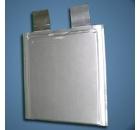
Low temperature Lithium Polymer Battery
bargain
add to cartlow Temperature lithium polymer batteries can work at -40℃, here we give you lithium polymer battery pack ATB6560158 29.4V 40Ah as an example (other sizes at your request) :
A, Introduction:
Together with technology's imporvement and actual demanding of low temperature batteries, there are many field in great demand of low temperature rechargebale ones.
Currently, almost all of batteries of China battery line can stand low temperature rate at minus 30 degrees.
While ATB's low tem battery can stand at most minus 40 degrees.
B, For instance, ATB6560158 battery packs, our's low tem version have following charcteristics as well.
Scope:
This document is made according to customer parameter requirements, it describes the Product Specification of Chargeable Lithium Polymer Battery produced by AIRTAKERBATTERY
The temporary specification is only for the customer's reference, not regared as the basis of the IQC and mutual confession
C, Specification
| No. | Item | Spec | Note |
| 1 | model | 6560158/40Ah | 8P7S |
| 2 | Charge Voltage | 29.4V (single cell 4.2V) | |
| 3 | Nominal Voltage | 25.9V | The average value of voltage during the discharge period (with standard charge and discharge) . When shipping, the voltage without load is between 25.2V and 26.95V. |
| 4 | Nominal Capacity | 8P: 40Ah Min: 38Ah | Nominal Capacity refer to the capacity of 0.2C discharge to 19.25V cut-off voltage, after charging with standard method. |
| 5 | Cycle Life | ≥300 Times | One cycle refer to one charge period and then one discharge period. Test condition: Charge: 0.2C to 29.4V Discharge: 0.2C to 19.25V The cycle life is the cycle times when the discharge capacity is about 75% of the rated capacity. |
| 6 | Impedance | Cell Impedance: ≤30mΩ; Assemblage Impedance: ≤80mΩ | After Standard charging, measure the internal resistance with AC1KHz (while measuring, clip near 2/3 place of the anode and the cathode.) ;Measure two sides of the drawing line after assembling. (Red B+, Black B-) |
| 7 | Max. Charge Current | 0.5C | |
| 8 | Max. Discharge Current | 1.0C | |
| 9 | Discharge Cut-off Voltage | ≤19.6V | |
| 10 | Operating Temperature | Discharge: -40℃~ +55℃ Charge: -40℃~ +45℃ | Cells must be stored at 25.2V ~ 27.3V. Over long storage periods cells should be cycled every 90 days. The method is to do a charge- discharge cycle with standard method, then charge to 25.2V~ 27.3V. |
| 11 | long term storage temperature | -5 ℃~+35℃ | Relative humidity: 45~75%RH Voltage: 3.8±0.1V (single cell) |
low Temperature lithium polymer batteries can work at -40℃, here we give you lithium polymer battery pack ATB6560158 29.4V 40Ah as an example (other sizes at your request) :
A, Introduction:
Together with technology's imporvement and actual demanding of low temperature batteries, there are many field in great demand of low temperature rechargebale ones.
Currently, almost all of batteries of China battery line can stand low temperature rate at minus 30 degrees.
While ATB's low tem battery can stand at most minus 40 degrees.
B, For instance, ATB6560158 battery packs, our's low tem version have following charcteristics as well.
Scope:
This document is made according to customer parameter requirements, it describes the Product Specification of Chargeable Lithium Polymer Battery produced by AIRTAKERBATTERY.
The temporary specification is only for the customer's reference, not regared as the basis of the IQC and mutual confession
C, Specification
| No. | Item | Spec | Note |
| 1 | model | 6560158/40Ah | 8P7S |
| 2 | Charge Voltage | 29.4V (single cell 4.2V) | |
| 3 | Nominal Voltage | 25.9V | The average value of voltage during the discharge period (with standard charge and discharge) . When shipping, the voltage without load is between 25.2V and 26.95V. |
| 4 | Nominal Capacity | 8P: 40Ah Min: 38Ah | Nominal Capacity refer to the capacity of 0.2C discharge to 19.25V cut-off voltage, after charging with standard method. |
| 5 | Cycle Life | ≥300 Times | One cycle refer to one charge period and then one discharge period. Test condition: Charge: 0.2C to 29.4V Discharge: 0.2C to 19.25V The cycle life is the cycle times when the discharge capacity is about 75% of the rated capacity. |
| 6 | Impedance | Cell Impedance: ≤30mΩ; Assemblage Impedance: ≤80mΩ | After Standard charging, measure the internal resistance with AC1KHz (while measuring, clip near 2/3 place of the anode and the cathode.) ;Measure two sides of the drawing line after assembling. (Red B+, Black B-) |
| 7 | Max. Charge Current | 0.5C | |
| 8 | Max. Discharge Current | 1.0C | |
| 9 | Discharge Cut-off Voltage | ≤19.6V | |
| 10 | Operating Temperature | Discharge: -40℃~ +55℃ Charge: -40℃~ +45℃ | Cells must be stored at 25.2V ~ 27.3V. Over long storage periods cells should be cycled every 90 days. The method is to do a charge- discharge cycle with standard method, then charge to 25.2V~ 27.3V. |
| 11 | long term storage temperature | -5 ℃~+35℃ | Relative humidity: 45~75%RH Voltage: 3.8±0.1V (single cell) |
Lithium Polymer Battery Work-Flow
| 1. Mixing • Mix solvent and bond separately with positive and negative active materials. Make into positive and negative pasty materials after stirring at high speed till uniformity. | ||
| 2. Coating | ||
| 3. Pressing • Press the above positive and negative sheets till they become flat. | ||
| 4. Cutting | ||
| 5. Pole pieces | ||
| 6. Winding | ||
| 7. Insulation Test 1 • After separate anode and cathode by separator paper; a battery cell has formed, then test its insulation. | ||
| 8. Sealing 1 | ||
| | ||
| 10. Insulation Test 2 • Test insulation of the terminal of the battery and the aluminum foil. | ||
| 11. Insulation Test 3 | ||
| 12. Vacuum Drying | ||
| 13. Electrolyte filling | ||
| | ||
| |
| |
| 16. Activiting • Charge and discharge the battery for the first time or more times, connect it to computer, monitor and record its performance indicators. | ||
| 17. Air exhausting • Air will exit inside battery after charging, draw it away until vacuum. | ||
| 18. Sealing 4 | ||
| | ||
| • Sort batteries according to their capacity with high-precision sorting equipments, which is watched and recorded their performances by computers at all times. | ||
| 21. Aging testing
• Store batteries in batches in warehouse after inspecting their internal resistance, voltage, capacity and size in the conditions of 10~45℃ and relative humidity of 65±20%. 30 days is needed. Batteries will be re-inspected regularly every 8 days. | ||
| 22. Assembly | ||
| 23. Final inspection | ||
| 24. Packaging • Packaging consists of inner plastic tray and outer double corrugated carton, make them a whole pallet, strap them, wrap with stretch film to insure transportation safety, the packaging comply the regulation of packing storage graphic symbol GB191-1990.
|

&img=www.atupapa.com/show/wxbuyer/img/apk.png&url=//www.atupapa.com/show/wxbuyer/whatnear.apk)