- Marketplace
- Merchants
- Restaurants
- UAE house
- Cloud accounting (GCC VAT)
- Me
- Cart
- My order
- Address book
- Favorite
- Link
- About us
- Download App
- 中文
- Merchant panel
Local Anesthetic APIS Aarticaine hydrochloride Articaine HCL CAS No.:23964-57-0
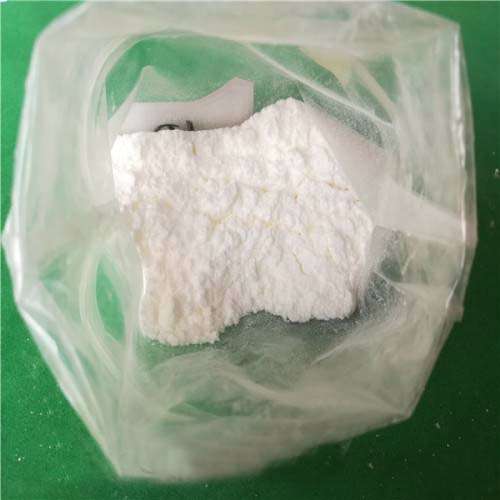
bargain
add to cartArticaine hydrochloride
Product Name: Articaine hydrochloride
CAS: 23964-57-0
MF: C13H20N2O3S.ClH
MW: 320.839
EINECS: 245-957-7
Usage Anesthetic;Na+ channel inhibitor
Articaine hydrochloride Description:
Articaine hydrochloride , its CAS NO. is 23964-57-0, the synonyms are 2-Thiophenecarboxylic acid, 4-methyl-3-((1-oxo-2-(propylamino)propyl)amino)-, methyl ester, monohydrochloride ; 4-Methyl-3-(2-(propylamino)propionamido)-2-thiophenecarboxylic acid methyl ester HCl ; Articaine HCl ; Methyl 4-methyl-3-(2-(propylamino)propionamido)-2-thiophenecarboxylate, monohydrochloride ; Septanest ; Septocaine .
Articaine hydrochloride Applications:
Articaine is a local anaesthetic that has been approved overseas for several years. Like other amide anaesthetics, articaine blocks nerve conduction when it is infiltrated around a nerve. This action is prolonged by combining the drug with a vasoconstrictor such as adrenaline.
The combination of articaine and adrenaline can be used for local or regional anaesthesia for dental procedures. Anaesthesia begins within six minutes and lasts for an hour. The half-life of articaine is approximately 1.8 hours. It is metabolised and then mainly excreted in the urine.
Clinical use:
(1) Articaine is used for pain control. Like other local anesthetic drugs, articaine causes a transient
and completely reversible state of anesthesia (loss of sensation) during (dental) procedures.
(2) In dentistry, articaine is used both for infiltration and block injections, with the block technique
yielding the greatest duration of anesthesia.
(3) In people with hypokalemic sensory overstimulation, lidocaine is not very effective, but articaine
works well.

&img=www.atupapa.com/show/wxbuyer/img/apk.png&url=//www.atupapa.com/show/wxbuyer/whatnear.apk)