- Marketplace
- Merchants
- Restaurants
- UAE house
- Cloud accounting (GCC VAT)
- Me
- Cart
- My order
- Address book
- Favorite
- Link
- About us
- Download App
- 中文
- Merchant panel
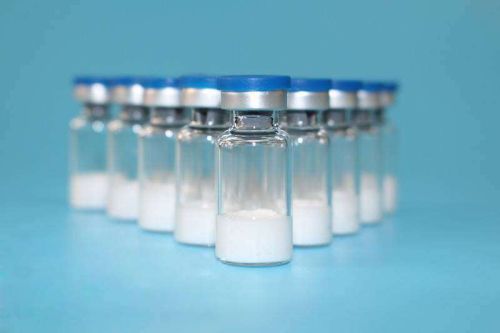
Human Growth Hormone Hexarelin / Hex To Lose Fat 2mg/vial CAS 140703-51-1
bargain
add to cartQuick Detail:
Product Name:Hexarelin
Sequence: His-D-2-methyl-Trp-Ala-Trp-D-Phe-Lys-NH2
Molecular formula: C47H58N12O6
MW: 887.04022
CAS number: 140703-51-1
PubChem: CID 5464109
Synonyms: Hexarelin Acetate, HEX, Examorelin
HS Code: 2937190090
Appearance: White Powder
Purity: 98%
Grade: Pharmaceutical Grade
Storage: Closed, below 2 ~ 8º C preservation
Usage: A synthetic can promote GH release six peptide, clinically used in the treatment of hormone secretion deficiency.
Description:
hormone secretagogue receptor is a G protein-coupled receptor that binds ghrelin and plays a role in energy homeostasis and regulation of body weight.
Hexarelin is a six-amino acid peptide. Studies have shown that hexarelin is actually more effective and longer lasting than hormone releasing hormone (GHRH). It is also known that GHRP-6 has a synergistic effect with GHRH, causing a far greater release than either of these substances alone. By combining GHRP-6 with Hexarelin, a more potent GH releasing peptide combination is created than ever heard of. The potential clinical usefulness of these GH releasing hexapeptides is also reinforced by observations that long-term administration produces elevations in circulating IGF-1 concentrations. Long term treatment with GHRP-6 similarly has been shown to elevate serum IGF-1 as well as IGF-binding protein-3 concentrations and promote linear growth.
Applications:
Ghrelin is an appetite-regulating factor secreted from peripheral organs that is involved in regulation of energy homoeostasis via binding to the receptor resulting in the secretion of hormone by the pituitary gland. The pathway activated by binding of ghrelin to the hormone secretagogue receptor, GHSR1a, regulates the activation of the downstream mitogen-activated protein kinase, Akt, nitric oxide synthase, and AMPK cascades in different cellular systems. One of the important features of GHSR1a displays constitutive activity possessing basal activity in the absence of an agonist, resulting in a high degree of receptor internalization as well as of signaling activity. Inverse agonists for the ghrelin receptor could be particularly interesting for the treatment of obesity. This activity seems to provide a tonic signal required for the development of normal height, probably through an effect on the GH axis.

&img=www.atupapa.com/show/wxbuyer/img/apk.png&url=//www.atupapa.com/show/wxbuyer/whatnear.apk)